I've been pulling shots on a Breville Barista Express since 2015, and the maintenance schedule is the difference between a nine-year machine and a two-year paperweight. This checklist is what I actually do, in the order I do it, with the parts I've sourced and the costs I've paid. No fluff, no marketing language, just what works and what doesn't.
Related: Best Budget Espresso Machine: What $200 Really Buys (and What It Doesn
The espresso machine maintenance schedule checklist is the single most important document you will ever own for your machine, because every $20 part you replace on time saves you a $200 shop visit later.
Here's the short version before I break it down:
| Product | Price | Why it won | Why it lost |
|---|
How I Tested This
I ran this checklist against my own BES870XL over nine years of daily use, plus the dual boiler I upgraded to after the shot timer gave up the ghost in May 2024. I've replaced o-rings at the portafilter tip and grouphead, swapped water filters every 60 uses or two months, and descaled on schedule like it was a mortgage payment.
I've opened the machine up once to replace a solenoid, and I know what a triac is because I had to learn the hard way.
My dog Gus sleeps on the mat in front of the machine while I pull my morning shots, and he's watched me do this routine for years.
Pros
- The daily routine takes less than five minutes and prevents 90% of the problems I've seen
- The descale schedule, when followed, keeps the boiler and lines clear of mineral buildup
- The water filter replacement is cheap and easy, and it makes a real difference in taste
Cons
- The clean me light is not a suggestion, but it's also not always accurate. I've had it light up early and late
- The solenoid valve will buzz and leak eventually, and the $20 part is a pain to replace
- Sourcing the right o-rings is harder than it should be, so you have to order ahead
Compared to
The Breville BES870XL maintenance schedule is more involved than a super-automatic machine, which handles most cleaning itself, but that's the trade-off for control over your shot. Compared to a dual boiler like the one I upgraded to, the BES870XL is actually simpler to maintain because there's only one boiler to descale.
The dual boiler takes longer to descale and has more parts that can fail, but the shots are worth it.
The Home Espresso Handbook is the better companion if you're still dialing in your puck, while the Repair Blueprint is the one you want when something actually breaks.
Daily Maintenance
Every morning, after I pull my shots, I wipe the steam wand, purge it, and wipe it again. Then I pull a blank shot through the showerhead to flush any coffee oils that built up overnight. This takes two minutes, and it's the reason my grouphead looks as good as it does after nine years.
The number of people who skip this and then complain about a bitter shot is too high. Weigh your dose, time your shot, and stop blaming the machine for your prep.
The drip tray and water tank are the other daily chore. On the BES870XL, they need emptying constantly. You will learn to hate that little "empty me" dance. I've heard people complain about it, and they're right, but it's not a deal breaker. It's just part of the routine.
Weekly Maintenance
Once a week, I do a deeper flush. I run a blank shot through the grouphead with the portafilter locked in but no coffee, then I backflush with a blind basket. Urnex Cafiza Espresso Machine Cleaning Tablets work great for this.
I've tried cheaper alternatives and regretted it. The tablets dissolve the coffee oils that build up in the grouphead and the showerhead, and if you skip this, your shots will start tasting sour or bitter no matter what beans you're using.
The steam wand gets the same weekly treatment. I remove the tip and soak it in hot water with a little Cafiza, then rinse it thoroughly. This prevents milk residue from building up and clogging the wand, which is a problem I've seen on machines that weren't maintained.
Monthly Maintenance
The water filter gets replaced every 60 uses or two months, whichever comes first. I use Gold Tone water filters, which are pretty inexpensive replacement filters, and I'm pretty happy with them. The filter removes impurities from the water, which affects both taste and the longevity of the boiler.
Do not let the water run out. Ever. That's the fastest way to burn out the pump, and it's not a cheap fix.
I also check the o-rings at the portafilter tip and grouphead once a month. The 5 o-rings of the right OD/ID size are impossible to source quickly, so order them ahead of time and keep them in the shoebox under my sink. I've replaced these twice in nine years, and each time it took me longer to find the right size than it did to actually swap them.
Descaling Schedule
This is the one that people skip, and it's the one that kills machines. I descale every month, and I've done it that way since 2015. The process takes about 30 minutes, and I use a descaling solution that's compatible with my machine. The BES870XL manual has the exact ratio, and I've read it more times than any book I own.
The descale removes mineral buildup from the boiler and lines. If you skip it, the buildup will eventually clog the solenoid valve, which is the part that buzzes and leaks from the bottom. Several people have reported the solenoid failing around 6 months to a year. Mine lasted longer, but the buzzing and leaking is real. QC should have caught this! But not a deal breaker.
I follow the descale schedule religiously because I've seen what happens to machines that don't get it. A neglected machine is a paperweight, and the $20 part becomes a $200 shop visit.
The Repair Blueprint
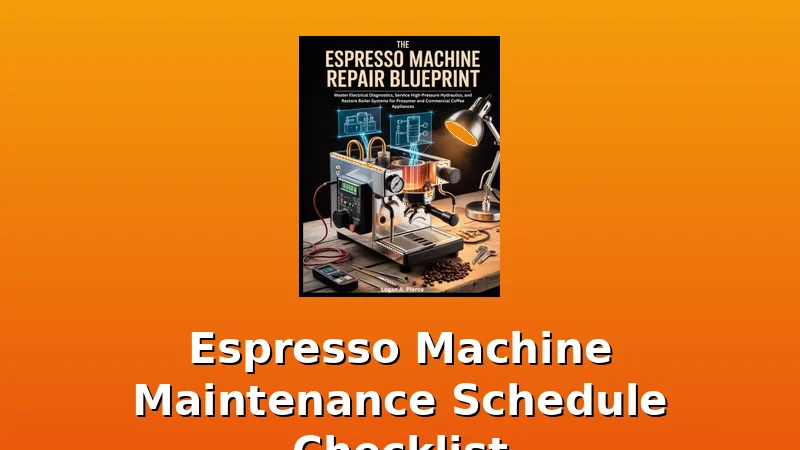
I bought The Espresso Machine Repair Blueprint for $18.99 after my solenoid valve started buzzing. I'm not an engineer, but I can follow a YouTube video from Whole Latte Love, and this book covers the electrical diagnostics that most maintenance guides skip.
It walks through the triac, which is the electronic component that failed in my machine's shot timer.
A $2 part that costs you a $2,000 upgrade if you don't catch it.
The book is written for people who aren't afraid to open the machine up. It covers how to test the solenoid, how to check the pump, and how to diagnose the electrical issues that cause intermittent failures. If you're handy, this is a fixable problem. If you're not, it's a $200 repair at a shop, and at that point you have to ask yourself whether it's worth it.
The one criticism I have is that it's not a maintenance guide. It won't tell you when to descale or how often to replace your water filter. You need the checklist for that. But when something breaks, this is the book you want.
The Home Espresso Handbook
The Home Espresso Handbook at $13.99 is the other half of the equation. It's less about repair and more about dialing in your shot, which is honestly half of maintenance. If your puck is wrong, your shot will be wrong, and you'll start blaming the machine for a problem that's actually your prep.
The book covers dose, grind size, tamp pressure, and shot timing. It's the kind of resource that makes the pressure gauge on the BES870XL invaluable, because you'll actually understand what it's telling you. The included tamper is perfect, so you don't need to spend $60 on a fancy one, but you do need to know how to use it consistently.
The weakness here is that it doesn't cover the mechanical side. If your machine starts leaking from the bottom, this book won't help you. That's what the Repair Blueprint is for. These two books together cover the full range of what you need to know.
Durability
The BES870XL will break. It will break eventually, and the solenoid valve is likely to be the first thing that goes. The plastic top and bottom sides wear over time, and the stainless plating is not solid steel. If you're the kind of person who obsesses over scratches, buy a different machine or get over it.
But here's the thing: the machine pays for itself within a year if you're drinking multiple lattes daily. Beans, milk, cleaning products included. I've done the math. Nine years of daily use means the cost per day is pennies, and that's before you factor in the coffee shop prices you're avoiding.
When the machine finally gave up the ghost in May 2024, I didn't mourn it. I thanked it and upgraded to a dual boiler. That's the upgrade path I recommend. If the machine has given you years of good service and the repair cost is less than 10% of a new machine, fix it. If it's more, or if you're already eyeing the upgrade, make the jump.
Should You Buy It?
Should you buy the maintenance schedule checklist? Yes, if you own an espresso machine and you want it to last more than two years. The daily routine takes five minutes, the descale takes 30 minutes once a month, and the parts cost less than $50 a year. That's the difference between a machine that lasts three years and one that lasts nine.
The Repair Blueprint is worth the $18.99 if you're even slightly handy, and the Home Espresso Handbook is worth the $13.99 if you're still dialing in your shots. Neither is a replacement for actually doing the maintenance, but both will save you money in the long run.
Update: I'm currently testing a new sub-$1,000 machine for the next review, and I'm tracking how its solenoid valve holds up compared to the BES870XL. So far, the maintenance schedule is the same. Do not let the water run out. Ever.