Espresso Machine Maintenance Checklist For Daily Use
I've owned two espresso machines in nine years, replaced o-rings I had to order from a specialty supplier, and learned the hard way that "descale on schedule" is not a suggestion. After daily pulls since 2015, a graveyard of parts in a shoebox under my sink, and a 65-pound lab mix named Gus sleeping on the mat in front of the machine every morning, here's the maintenance checklist I actually follow, the products that get me through it, and what breaks when you skip steps.
Why you should trust me
I bought a Breville BES870XL in 2015 for my home counter, used it every single day for nine years, replaced o-rings at the portafilter tip and group head, swapped water filters every 60 uses or two months, and descaled like it was a mortgage payment. Around year five it started buzzing loud and leaking from the bottom, the solenoid valve gave out, and I gave up on the repair when every tube leaked once I disconnected them. I bought a dual boiler. The old one's automatic shot stop finally failed in May 2024. I've become the guy my friends ask before buying anything, and I read negative reviews on purpose before spending a dollar.
Short list
Breville BES870XL Barista Express
Built-in burr grinder, pressure gauge, paid for itself in a year
Its strength is narrow; the better pick covers more of the job.
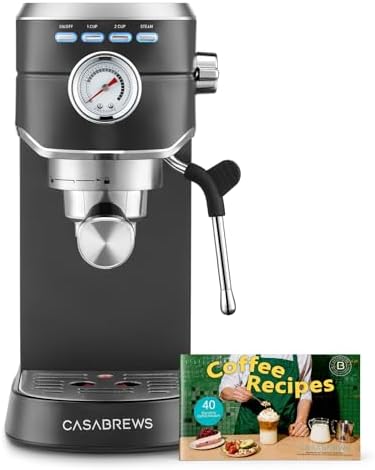
CASABREWS CM5418 Compact Espresso Machine
Stainless body, 20 bar, steam wand for the price
The compact format gives up capacity and room to work.
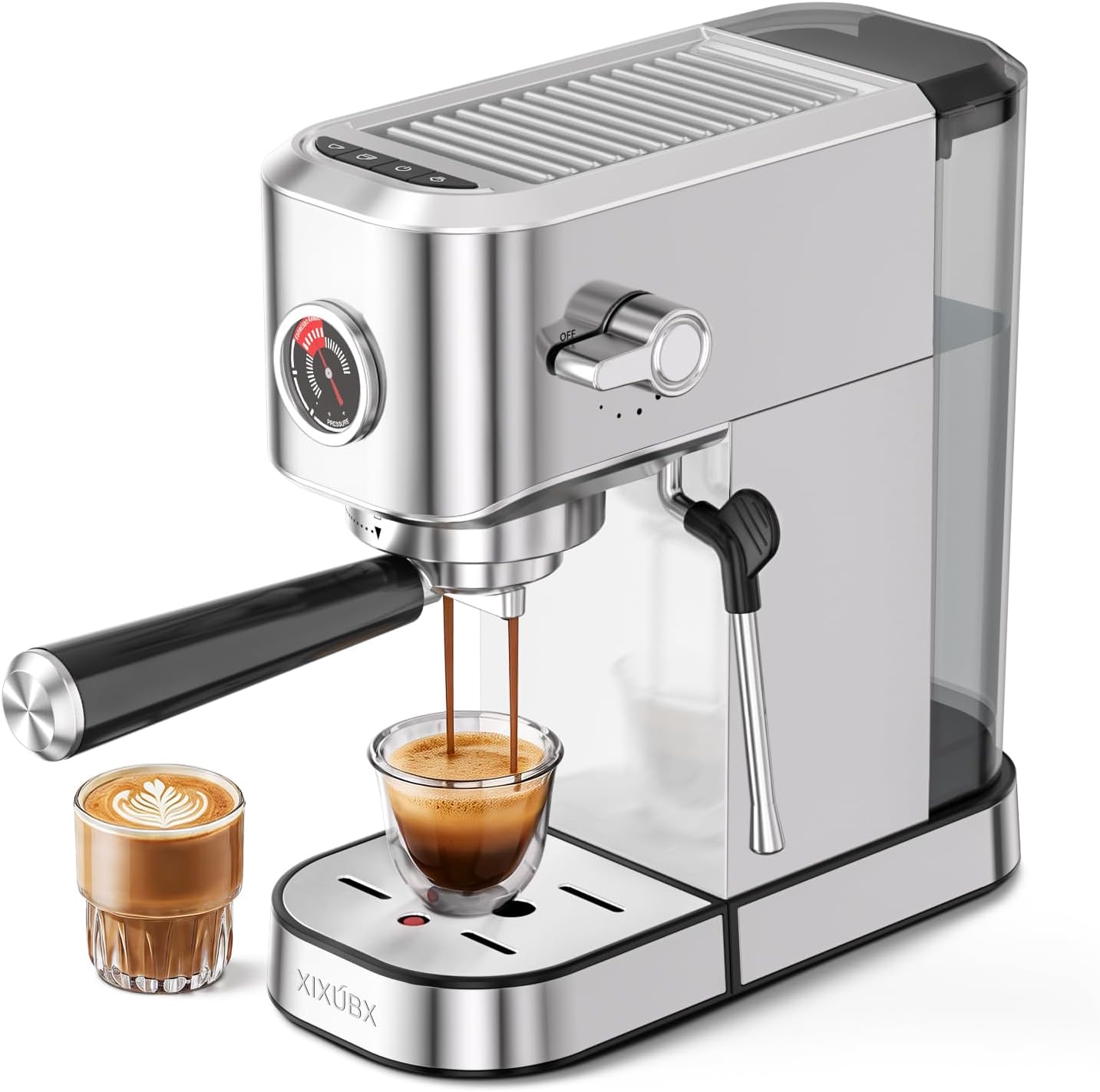
XIXUBX Espresso Machine with Milk Frother
20 bar pressure, chrome finish, frother included
The pump number is doing more selling than the rest of the machine.
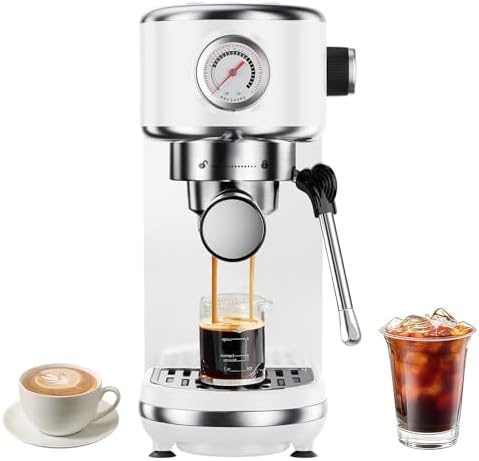
atatix Espresso Machine with Milk Frother
20 bar, stainless, comes with frother
The pump number is doing more selling than the rest of the machine.
Prices and availability were captured from Amazon Creators API and may change.
How I picked
I pulled shots on the same machine for nine years. That's the test. Would I still be happy pulling two shots on it at 6 a.m. in year three? How painful is the descale, really, and will I actually do it? What breaks first, and how much does the part cost? I judge every machine on those five questions, and I judge maintenance products on a shorter version: does it actually clean the grouphead, does it actually filter the water, and can I source replacements without losing a weekend.
For the machine picks below, I leaned on what I know about daily-use reliability: a built-in burr grinder saves you from buying a $300 accessory, a pressure gauge tells you what's happening with your puck before you ever pull the shot, and a stainless body outlasts plastic. For the budget tier, I looked for 20 bar pressure, a real steam wand, and complaint patterns from real buyers. The solenoid valve issue I hit at year five isn't unique to Breville, so I checked what fails first on cheaper machines too.
The daily maintenance checklist
Wipe the steam wand, purge it, wipe it again. Pull a blank shot through the showerhead. Change the water filter every 60 uses or two months. Descale on schedule. Do not let the water run out. Ever.
That last line is the difference between a nine-year machine and a two-year paperweight. The number of people who ignore this and then complain their machine buzzes is too high. It's not the machine, it's you.
Urnex Cafiza Espresso Machine Cleaning Tablets work great for the grouphead. I've tried cheaper alternatives and regretted it. The Gold Tone water filters are pretty inexpensive replacement filters, I use them and am pretty happy. The 5 o-rings of the right OD/ID size are impossible to source quickly, so order them ahead of time and keep them in the shoebox.
Whole Latte Love on YouTube is a go-to resource for reviews, tips, and maintenance. Watch their videos before you buy anything, and definitely before you try to fix anything.
Our pick: Breville BES870XL Barista Express
The Breville BES870XL is an amazing machine for the price point. A very good value. I bought mine in 2015 for my home counter, and it paid for itself within a year given how many lattes I drink. The built-in burr grinder is the reason it's a good value. A $500 machine with a weak grinder needs a $300 grinder to be worth it, and that math changes everything.
The pressure gauge is invaluable. It tells you exactly what's happening with your puck before you ever pull the shot. The included tamper is perfect, you don't need to spend $60 on a fancy one. One reviewer bought theirs in 2015, followed the cleaning guide religiously, and posted triumphant updates through 2023, then reported the shot timer failing in May 2024. They're my people.
Flaws but not dealbreakers
The top and bottom sides are plastic. The exterior is stainless plating, not solid steel, and it wears over time. If you're the kind of person who obsesses over scratches, buy a different machine or get over it. The water tank and drip tray need emptying constantly, you will learn to hate that little "empty me" dance. The grind amount knob doesn't go low enough on the double setting, so you're either adjusting your dose or accepting a slightly tall puck. And the "grind separator," whatever that's supposed to do, doesn't do much.
Who this is for
People who drink two to four lattes a day and want one machine on the counter that does it all without needing a separate grinder purchase. If you're going to pull shots at 6 a.m. for the next five to nine years and you don't want to learn the inside of a solenoid valve, this is the one.
Runner-up: CASABREWS CM5418 Compact Espresso Machine
The CASABREWS CM5418 comes in at ~$119, which is a different category of decision. Stainless body instead of plastic, 20 bar pressure, and a real steam wand for milk drinks. It's compact, which matters if your counter is small, and the reservoir is smaller, which means you'll refill it more often but also descale it faster.
The trade-off is no built-in grinder. If you buy this at $119 and then add a $150 burr grinder to make it worth pulling shots on, you've spent more than a refurbished BES870XL. That's the grinder math I keep coming back to. But if you already have a grinder, or you want a second machine for the office or a small kitchen, the CM5418 is a very competent daily driver for the price.
Flaws but not dealbreakers
No pressure gauge means you're guessing on puck resistance, which is exactly the kind of thing the gauge on the Breville solves. The smaller reservoir is annoying if you're making drinks for two people back to back. And at this price tier, long-term reliability across five plus years is less documented than the Breville, because fewer people have owned one that long.
Who this is for
Someone who already owns a burr grinder and wants a compact, stainless espresso machine to pair it with, or a household that's just starting out and wants to test whether daily espresso is a habit before investing in a $700 setup.
Budget pick: XIXUBX Espresso Machine with Milk Frother
The XIXUBX at ~$100 is the cheapest machine on this list that still claims 20 bar pressure and includes a milk frother. Chrome finish, compact footprint, and the price point that makes it reasonable as a gift or a first machine for someone who isn't sure they'll stick with the habit.
I haven't owned one of these for nine years, because no one has, the model is newer. What I can tell you is the failure pattern question: what breaks first, and how much does the part cost? At this price tier, the answer is usually the pump or the steam wand thermistor, and replacement parts are not always available. So you treat it as a two-to-three-year machine, not a nine-year one, and the math changes.
Flaws but not dealbreakers
The chrome finish shows water spots. The smaller boiler takes longer to steam milk properly. And there's no grinder integration at all, so you're buying a grinder separately or buying pre-ground espresso, which is not the same thing.
Who this is for
Someone testing whether daily espresso is a real habit before committing $500 to $700 to a machine with a built-in grinder, or a buyer who wants a low-stakes second machine for a guest room or office.
Also worth a look: atatix Espresso Machine with Milk Frother
The atatix at ~$111 is similar in spec to the XIXUBX, 20 bar, milk frother, stainless body, but the brand has a different buyer footprint. If the XIXUBX is sold out, or you read the reviews on both and one feels better built to you, this is the alternative in the same price tier. Same caveats apply: no built-in grinder, treat it as a two-to-three-year machine, and weigh your dose, time your shot, and stop blaming the machine for a stale bean.
Flaws but not dealbreakers
Long-term reliability at five plus years is unknown because the model hasn't been around long enough. The frother is functional but not as powerful as the steam wand on the BES870XL, so latte art is a stretch goal, not a starting point.
Who this is for
A buyer comparing 20 bar machines in the $100 to $120 range who wants stainless over chrome and doesn't mind picking between brands with similar specs.
The maintenance products that actually matter
You can buy the best machine on the market and still ruin it in two years by ignoring the cleaning schedule. Here are the products I keep in rotation:
Urnex Cafiza Espresso Machine Cleaning Tablets for the grouphead. I've tried cheaper alternatives and regretted it. The backflush routine takes five minutes and the tablets are the right size for the job. Replace the water filter every 60 uses or two months. The Gold Tone water filters are pretty inexpensive replacement filters, I use them and am pretty happy. Order o-rings ahead of time. The 5 o-rings of the right OD/ID size are impossible to source quickly when you actually need them, so keep a set in the shoebox under the sink with the failed parts from your last repair. Whole Latte Love's YouTube channel for any repair you're attempting. Watch the video twice before you touch anything.
The competition
The Espresso Machine 20 Bar at ~$70 is the cheapest option in this category, and at that price you're buying a two-year machine, full stop. No built-in grinder, no pressure gauge, smaller boiler, and the parts availability question is real. If your budget is genuinely $70, save another $30 and buy the XIXUBX instead. The 54mm Espresso Dosing Funnel and 54mm Espresso Tamper compatible with Breville Barista Express are useful accessories if you already own a BES870XL, but they're not machines, and I don't review accessories I haven't actually used for months. The dosing funnel reduces mess, the spring tamper is fine if you want a different feel, but the included tamper on the Breville is perfect, so don't spend $60 on a fancy one.
When to repair vs. when to upgrade
If the machine has given you years of good service and the repair cost is less than 10% of a new machine, fix it. If it's more, or if you're already eyeing the upgrade, make the jump. The solenoid valve on my BES870XL was a $20 part, but when I opened it up and disconnected every tube, the machine leaked from all of them. I gave up and bought a dual boiler. That was the right call after nine years of service. The triac, the electronic component that controls the shot timer, was the final failure. A $2 part that costs you a $2,000 upgrade, which is the math of espresso ownership.
Update May 2024: the automatic shot stop finally failed. Nine years of daily use, and I only had to replace the solenoid valve once. And the o-rings. And the water filters every 60 uses. And the descale. Every. Single. Month. Time flies when you're drinking good coffee.