I spent my twenties behind a cafe counter pulling shots for people who wanted caramel in everything, and I have spent the years since pulling them on my own counter. My Breville BES870XL ran every single day for nine years before it gave up the ghost. Nine years of water filters, o-rings, and descaling on a schedule I treated like a mortgage payment. That is the lens I bring to any espresso machine comparison: not what the box promises on day one, but what the machine asks of you in month eight and what it costs to keep alive in year three.
Related: Espresso Machine Cleaning And Descale Schedule
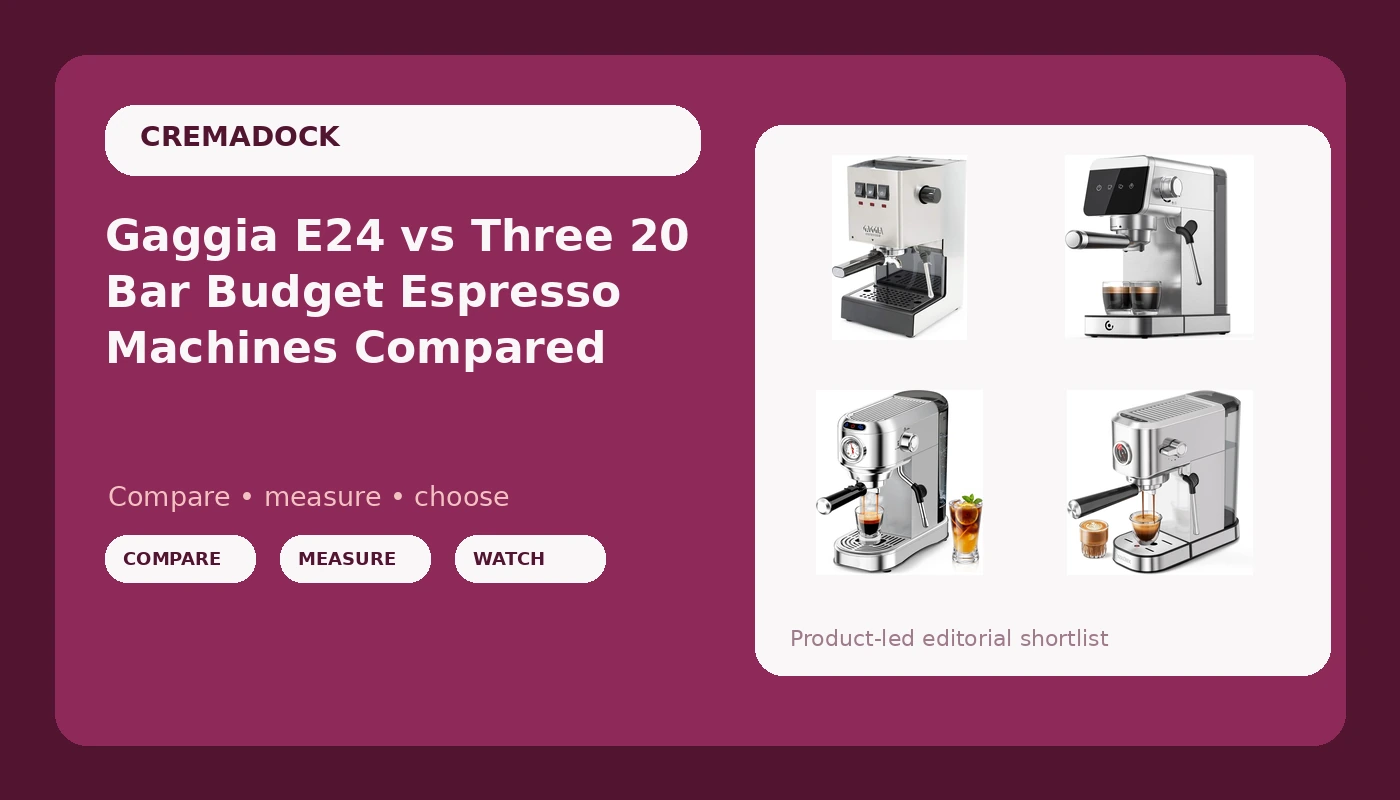
The short answer: the Gaggia RI9380/46 E24 is the machine I would buy in this group, and the three compact 20 bar machines are a different product category wearing similar clothes. Not because they are bad, but because they are appliances. The Gaggia is a platform. Those are two different purchases, and confusing them is how people end up disappointed at both ends of the price range.
I am not going to pretend I have spent nine years with all four of these on my counter, because I have not. What I can do is read the design, the parts, and the maintenance reality, and tell you which machine each kind of buyer is actually signing up for.
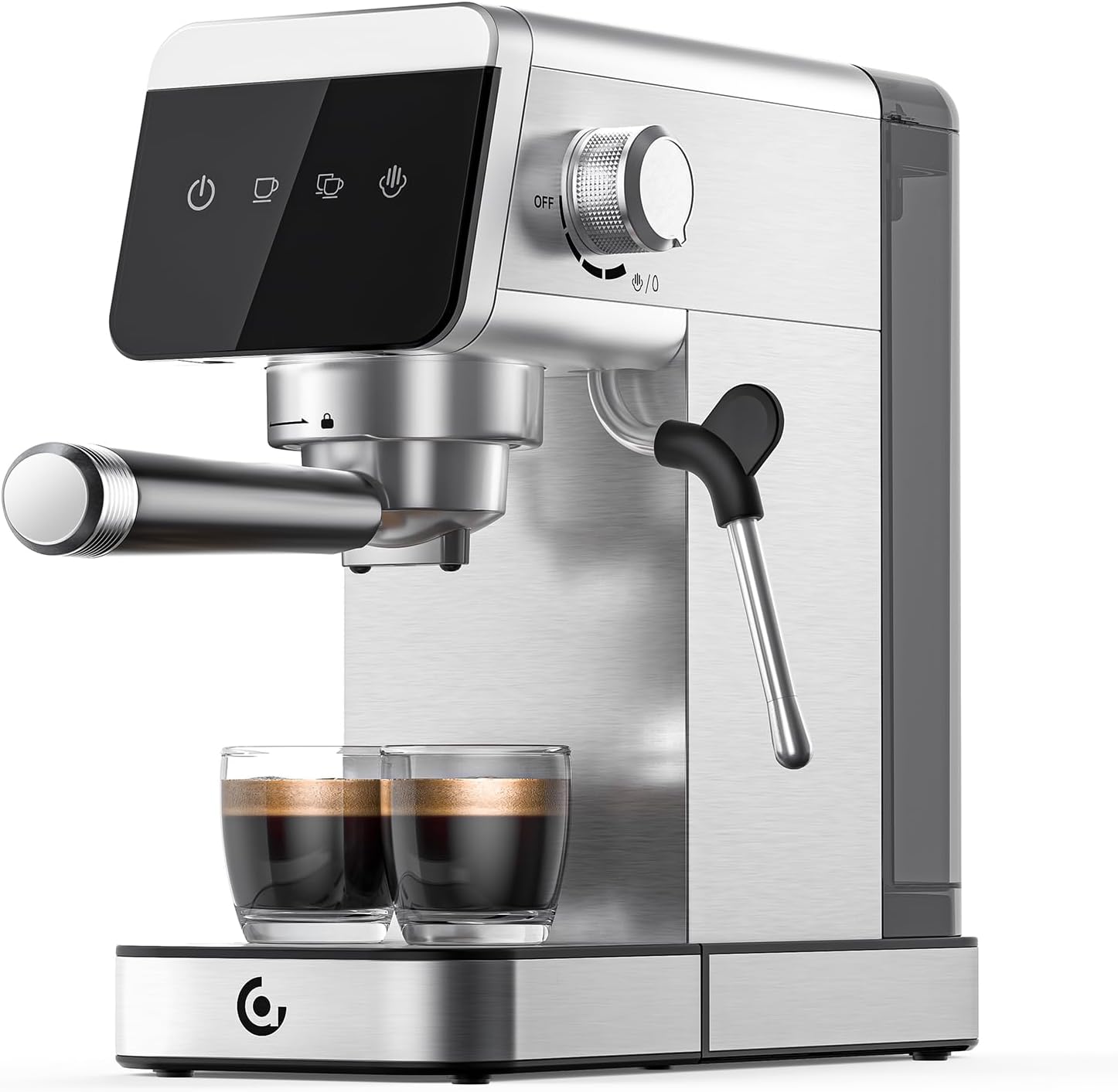
AMZCHEF 20 Bar Compact Home Espresso Coffee Machine, Matte Silver
Lowest-cost entry in the group, and the matte silver finish hides fingerprints and water spots better than chrome
The 20 bar claim is a pump maximum, not a shot quality promise, and there is no pressure gauge to tell you what is really happening
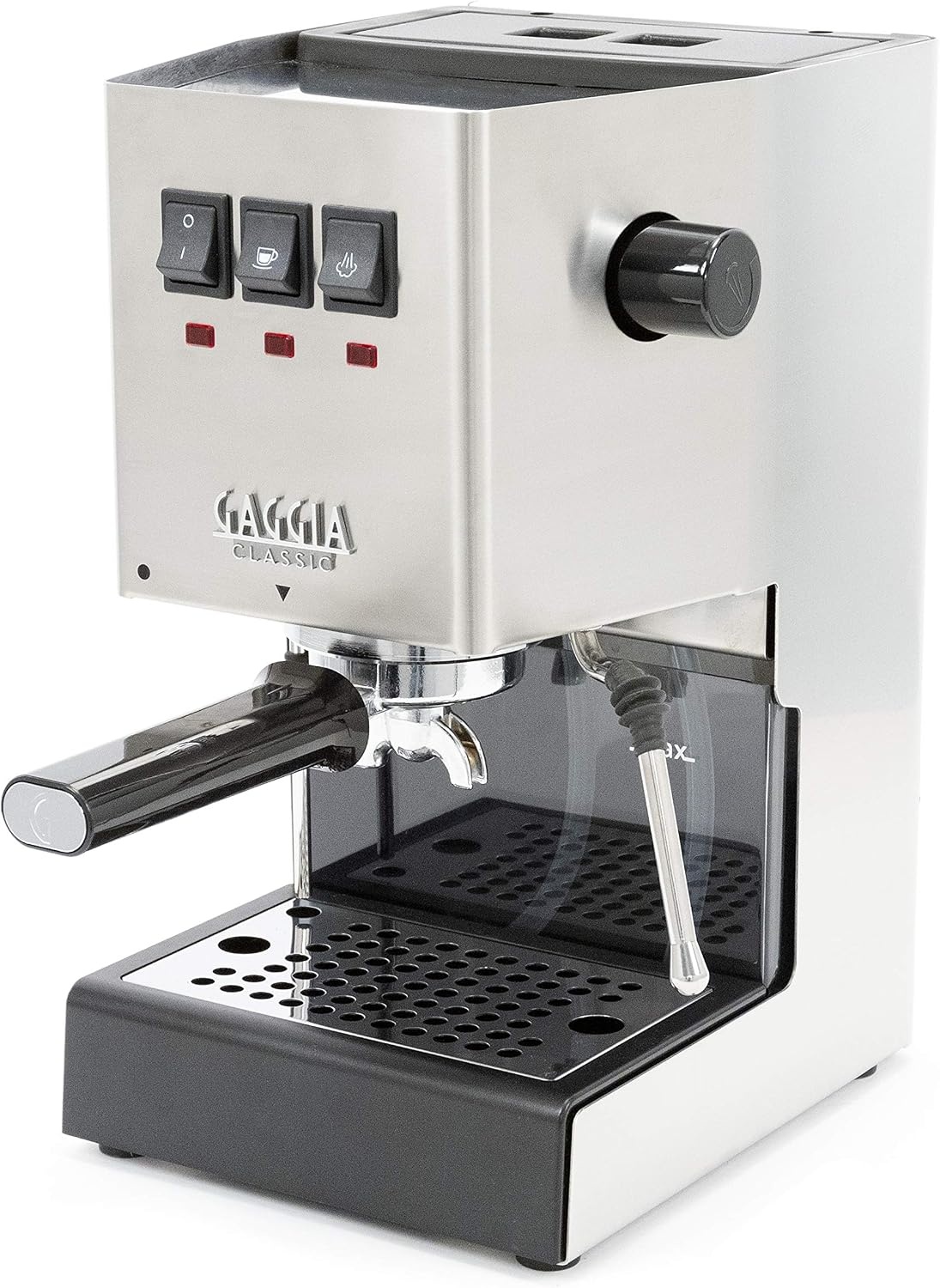
Gaggia RI9380/46 E24 Espresso Machine, Brushed Stainless Steel
The only platform machine here. Parts, baskets, and upgrades are realistic purchases in year four instead of a replacement machine
Most expensive of the four, and it will expose every weak link in your grind, dose, and prep without hiding any of it
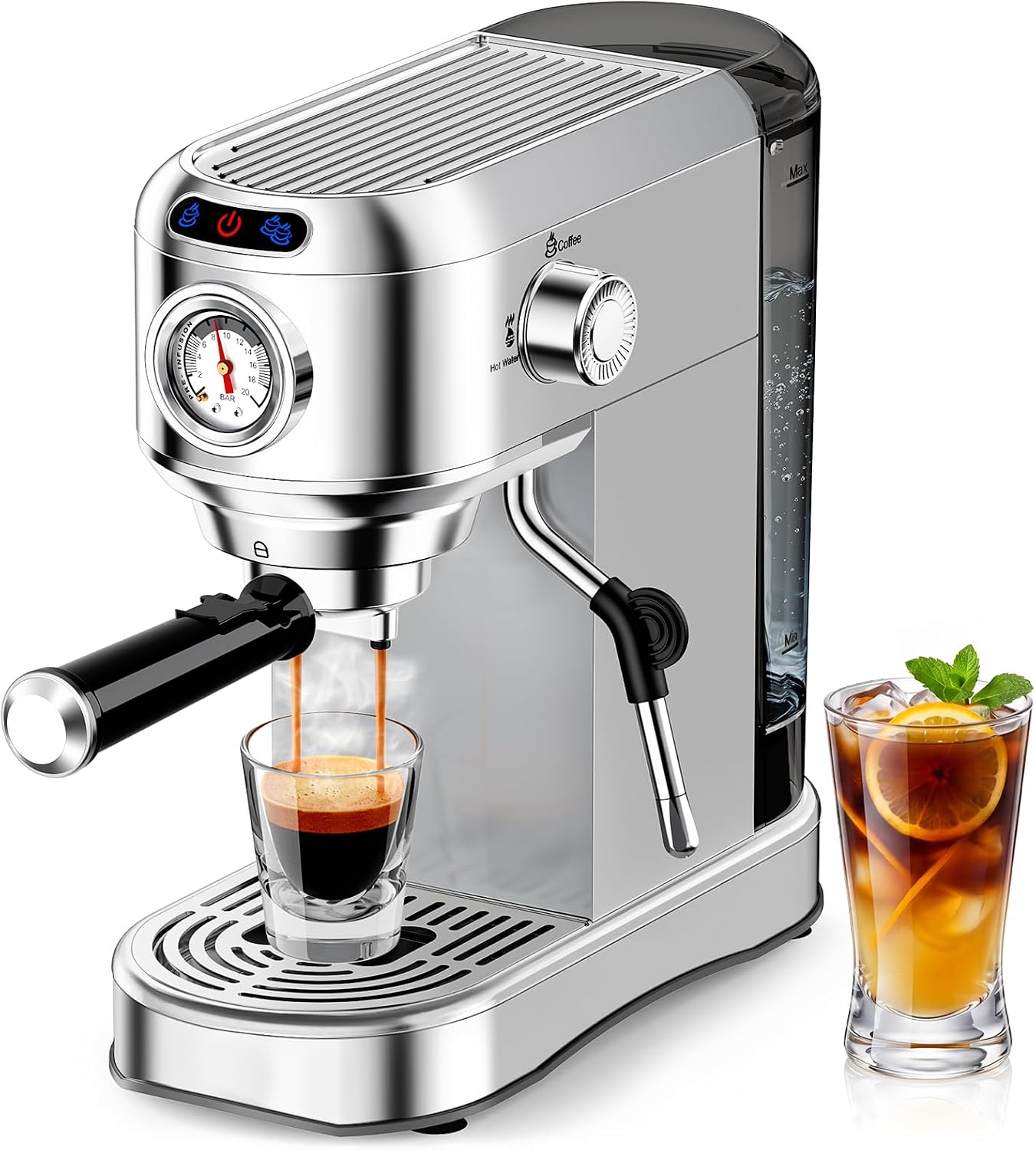
Espresso Machine 20 Bar, Compact Espresso Coffee Machine with Milk Frother, Stainless Steel Coffee Maker with 34oz Removable Water Tank, Cappuccino Machine for Home, Office, Latte (Silver)
The 34oz removable water tank is the practical feature nobody markets well, and it is the one that keeps a two-drinker kitchen from refilling twice a day
Generic branding, so service and spare parts are a question mark, and the frother is convenience, not technique
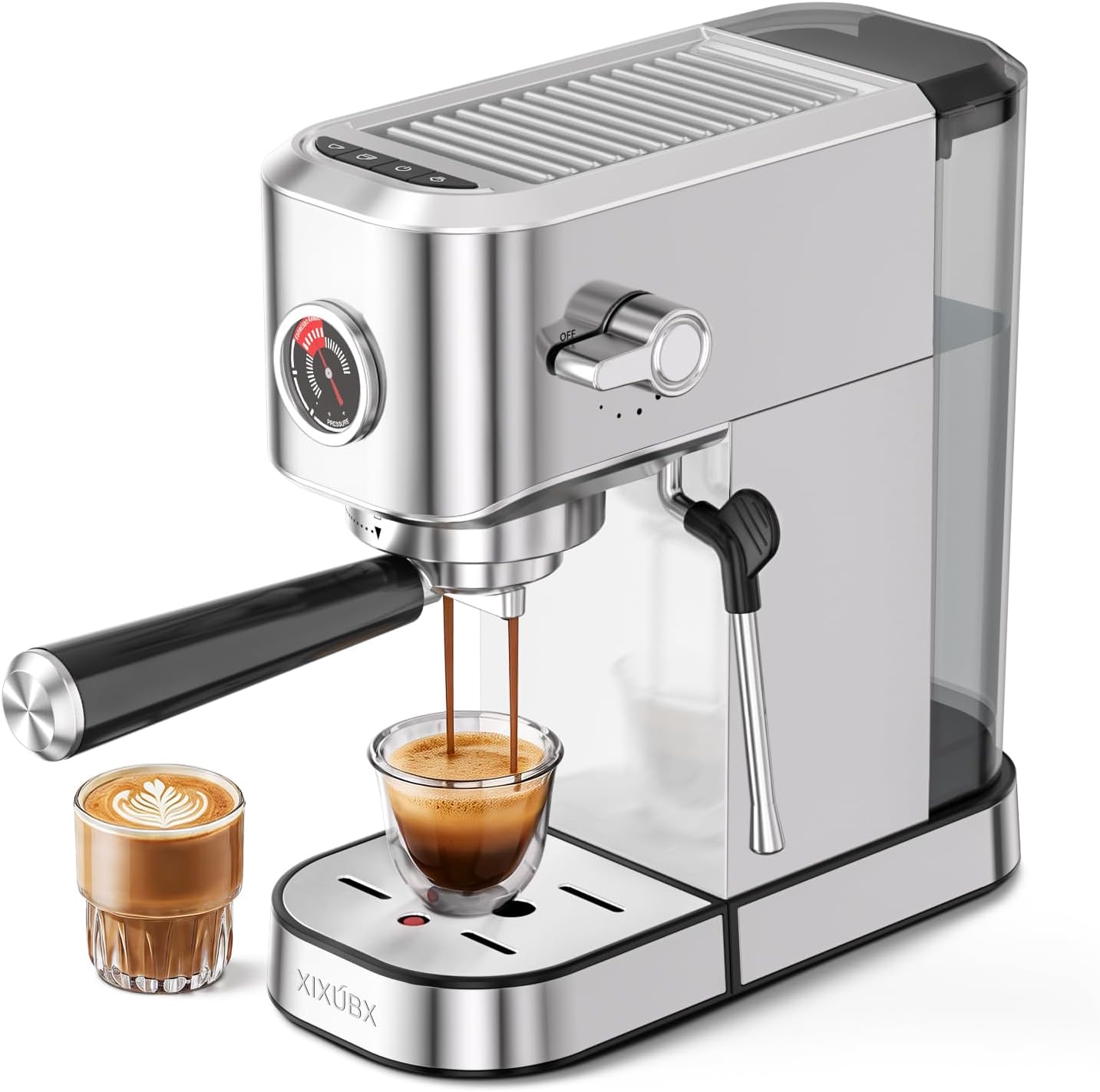
XIXUBX Espresso Machine with Milk Frother for Cappuccino & Latte, Chrome
Built for the latte-first buyer, with the frother included so you are not buying a separate pitcher setup on day one
Chrome is a commitment. Every water spot shows, and a frother will never give you the texture a steam wand gives you
Prices and availability were captured from Amazon Creators API and may change.
What 20 bar on the box actually means
Two of these machines lead with "20 bar" in the product name, and that number is doing marketing work, not espresso work. Espresso extracts at roughly nine bars of pressure at the puck. A pump rated to 20 bars is a maximum, not a target, and on a machine with no pressure gauge and a pressurized basket, the extra headroom mostly shows up as forgiveness for a bad grind. Forgiveness is fine if you are running pre-ground coffee from a tin. It is not a quality signal, and it does not tell you anything about how the machine behaves with fresh beans.
My pet peeve, and I will say it plainly: a machine sold as espresso that cannot hold nine bars at the puck without choking is a coffee-flavored milk appliance. You will not know which one you bought until you pull a shot with fresh beans and a real grinder. If a machine has a pressure gauge, learn to read it, because it will tell you more than any listing page ever will.
Gaggia RI9380/46 E24: the platform, not the appliance
Gaggia is the brand for people who want to tinker. That reputation comes from a long line of machines that share parts, accept upgrades, and can be opened up without a service tech standing over you. The E24 in brushed stainless steel is the only machine in this group from a company whose whole business is espresso machines, and that matters most in year four, when you need a gasket, a shower screen, or a replacement basket and want more than one place to buy it.
What you are buying is room to grow. Start with the machine, then budget for a real burr grinder, then a scale, then the small upgrades that make the machine behave the way you want. The trade-off is the learning curve, plus the fact that this machine will punish lazy prep in a way the budget machines never will. A pressurized basket hides a stale bean and an uneven grind. This one does not. That is frustrating for two weeks and then it is the reason your shots taste like the ones you used to pay for.
Check current Amazon price: Gaggia RI9380/46 E24 Espresso Machine
AMZCHEF 20 Bar Compact: the lowest entry point
The AMZCHEF is the compact 20 bar machine for someone who wants a small footprint on the counter and a matte silver finish that will not look like a crime scene after a week of hard water. Compact matters more than people admit. If the machine does not fit under the cabinet, you will not use it, and an unused machine is the most expensive thing in the kitchen.
The honest trade-off: at this tier, you are buying a sealed appliance. There is no gauge, no standard-size basket ecosystem to grow into, and the 20 bar figure on the name is a pump ceiling. Check whether it ships with a pressurized basket before you buy, because that single detail decides whether this is a real espresso machine or a very good cappuccino machine. Both are legitimate purchases. They are just not the same purchase.
Check current Amazon price: AMZCHEF 20 Bar Compact Home Espresso Coffee Machine
The 34oz removable tank model: the practical pick
This one has the longest name in the group and the most useful single feature: a 34oz removable water tank. Water tank capacity is boring until you are the person refilling it. A removable tank you can carry to the sink beats a built-in tank you have to fill with a pitcher, and 34oz gets two people through a morning without a second trip.
Two things to check in person. First, can you see the water level from the front of the machine? Water tanks you cannot read from where you stand are how machines get run dry, and a dry boiler is how machines die young. I have said this a hundred times and I will keep saying it: do not let the water run out, ever. Second, look at the drip tray. A tray that needs emptying every two shots is a tray that will overflow onto your counter while you are steaming milk.
The rest of it is the standard compact 20 bar package: stainless steel body, milk frother, and a design built for convenience over control. If it lives in a shared kitchen or an office, that is exactly the right trade.
Check current Amazon price: Espresso Machine 20 Bar with 34oz Removable Water Tank
XIXUBX with milk frother: the latte-first machine
The XIXUBX is the chrome one, and it knows exactly who it is for: someone whose morning drink has milk in it and who wants that handled without buying a separate frothing setup. Chrome looks great in a listing photo and less great on a counter in a hard water town, so keep a microfiber cloth nearby or you will spend your first month polishing it.
The frother is the part to be honest about. A frother is a convenience tool, not a steam wand. It will get you hot milk with some air in it. It will not give you the microfoam texture you get from a wand and a cold pitcher, and it will not let you pour a flat white that holds a shape. If you drink lattes and you are happy with hot, slightly foamy milk, this does the job. If you want to learn milk texture, this is not the machine that teaches you.
Check current Amazon price: XIXUBX Espresso Machine with Milk Frother
Maintenance is the whole ballgame
An espresso machine is a maintenance contract with a pump attached. Buy the one you will actually clean, or it does not matter how good the shots are in month one. The three compact machines and the Gaggia all need the same three things from you: fresh water, a descale on schedule, and a backflush or cleaning cycle with something like Cafiza tablets.
Where they differ is how painful the job is. Machines with removable tanks and accessible groupheads get cleaned. Machines where you have to contort a wrench into a cabinet to reach a fitting do not. Before you buy anything, look for the cleaning instructions and ask yourself whether you would actually follow them at 9 p.m. on a Sunday. If the answer is no, buy the simpler machine and accept the smaller ceiling. A $700 machine you use daily beats a $3,000 machine that intimidates you into using the drip coffee maker.
What breaks first, and what it costs to care
In this category, the usual suspects are the solenoid valve, the pump, the group gasket, and the housing finish. When a solenoid goes, you get a loud buzz and water leaking from the bottom. It is often a cheap part and an annoying job. When cheap stainless plating wears through, you see the plastic underneath, and there is nothing to repair, only a cosmetic reminder that you bought a finish instead of a material.
That is the argument for buying from a brand with a parts pipeline. If you can find a replacement basket, gasket, or valve in a few minutes, a machine can last a decade. If you cannot find parts at all, the machine is disposable the day something wears out, no matter how well it poured. Budget for that reality rather than pretending it will not happen.
The grinder is half the machine
The grinder is half the machine. A great machine with a weak burr grinder makes sad coffee at any price, and a budget machine with a real burr grinder will beat an expensive machine fed by a blade chopper every single morning. If you are choosing between spending more on the machine or spending on a grinder, spend on the grinder first, then save for the machine you actually want.
This is also the quiet reason the Gaggia wins this comparison for anyone who wants to learn. It rewards a better grinder, a scale, and better beans. The compact 20 bar machines are designed to be forgiving of all three, which is a feature until the day you want more.
Who should buy which
Buy the Gaggia RI9380/46 E24 if you want a machine you can maintain, repair, and grow into, and you are willing to spend the first month learning. Buy the AMZCHEF if counter space and budget are the two constraints and you want a small machine that looks good doing it. Buy the 34oz tank model if two people drink from the same machine every morning and you are tired of refilling. Buy the XIXUBX if milk drinks are the point and you want the frother included from day one.
Whichever one you pick, the rules are the same. Weigh your dose, time your shot, keep the water topped up, and descale before the machine has to ask twice.