I spent my twenties behind a café counter pulling shots for people who wanted lattes with extra caramel, and the decade after that learning what the machine was actually doing. In 2015 I bought a Breville BES870XL for my own kitchen in Columbus, Ohio and ran it every single day for nine years. It died doing the job it always did, and the failed solenoid from that machine still lives in a shoebox under my sink. That history is why this round of home espresso machines compared is organized around maintenance and temperament instead of marketing bullet points. An espresso machine is a maintenance contract with a pump attached. Buy the one you will actually clean, or it does not matter how good the shots are.
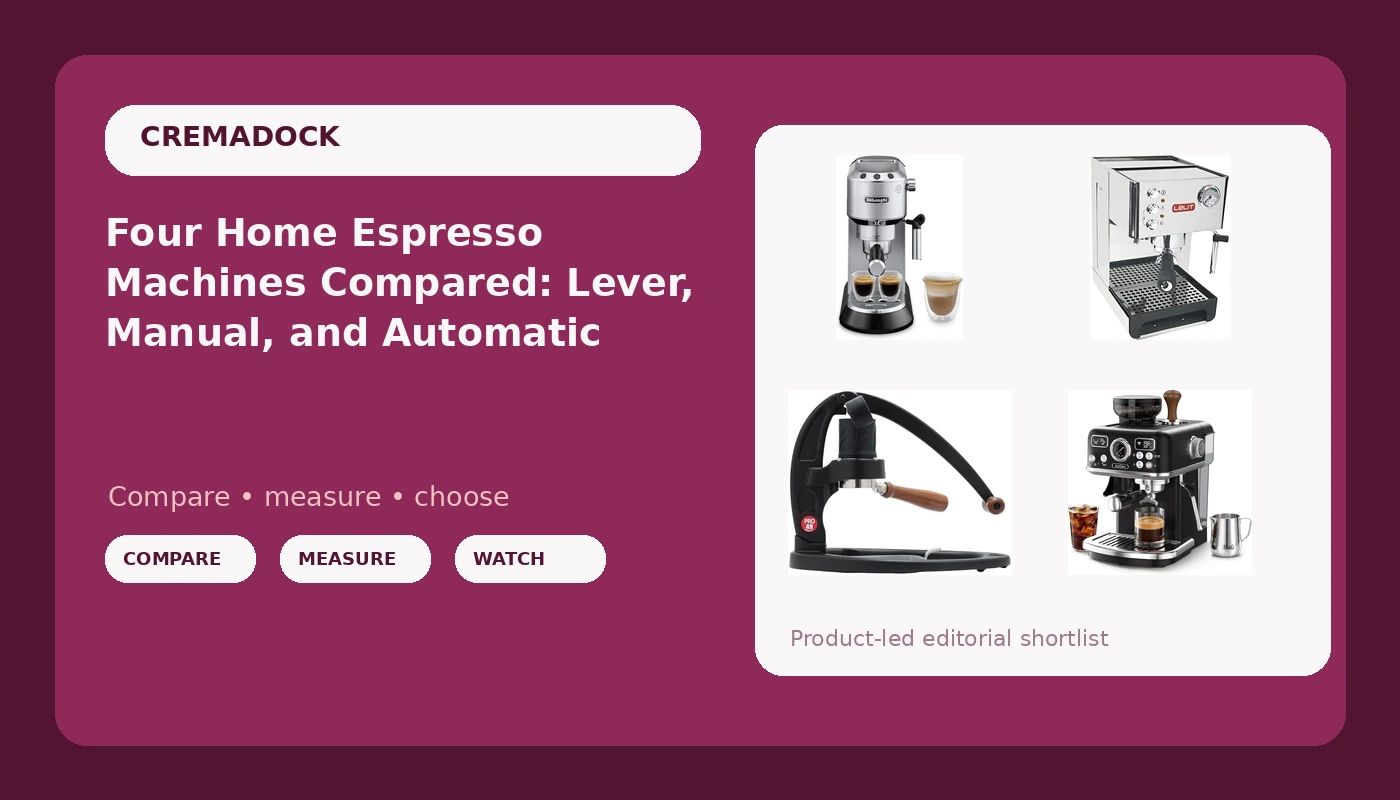
Four machines are on the table, and they are not really the same species. Two are electric machines with pumps and steam wands. One is an all-manual lever device with a pressure gauge and no plastics in the brew path. One comes out of the small single-boiler Italian tradition that rewards attention and punishes neglect. They compete less on features than on the kind of morning you want to have, and the wrong pick is the one you stop cleaning by month four.
The closest thing to a set-and-forget pick here is the XIXUBX Espresso Machine with Grinder, because it puts the two things people consistently under-buy, a real burr grinder and temperature control through a PID, into one box with programmable settings. If you already own a good grinder and want the smallest possible footprint, the De'Longhi Dedica is the pragmatic second. If you want to learn the craft with your hands, the Flair 49 PRO is an honest teacher. The Lelit Anna is for the person who wants a small, serviceable, traditional machine and does not mind learning it.
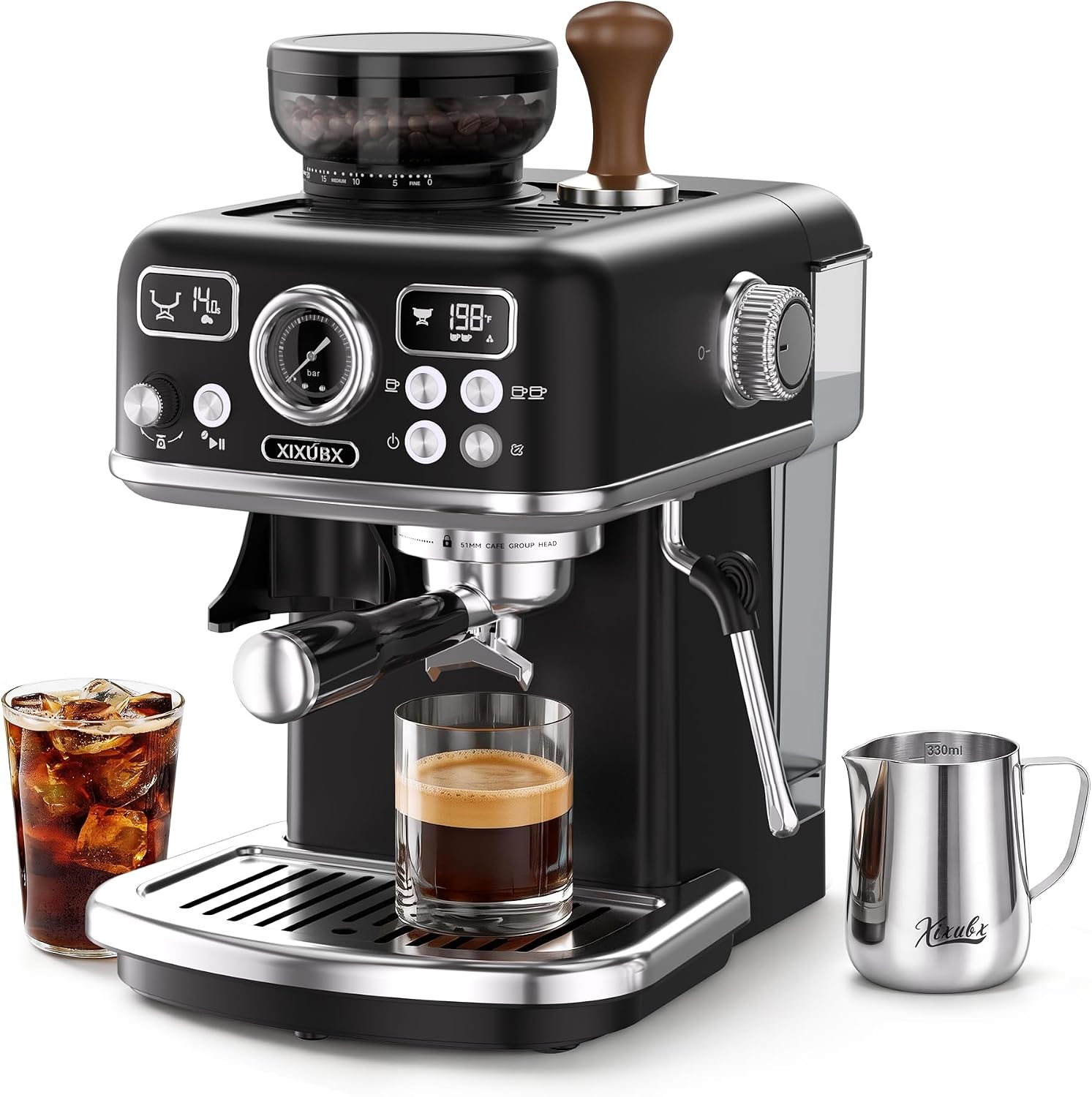
XIXUBX Espresso Machine with Grinder, PID & Programmable Settings, Black
One box covers grinder, temperature control, and repeatability, so there is nothing else to buy on day one
All-in-one means all-in-one failure points, and the built-in grinder is the part most likely to limit you later
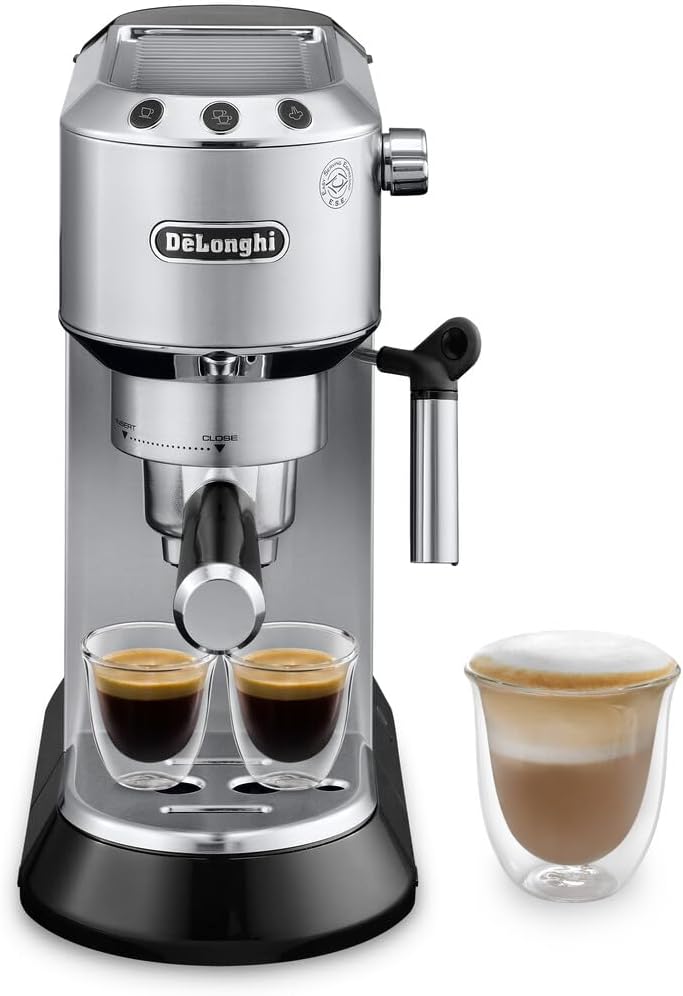
De'Longhi Dedica Espresso Machine, 15-Bar Pump, Frother, Stainless Steel
Thin, quick to heat, and surprisingly decent espresso once you pair it with a real grinder
The pressurized basket that makes it forgiving is also the thing you eventually want to throw away
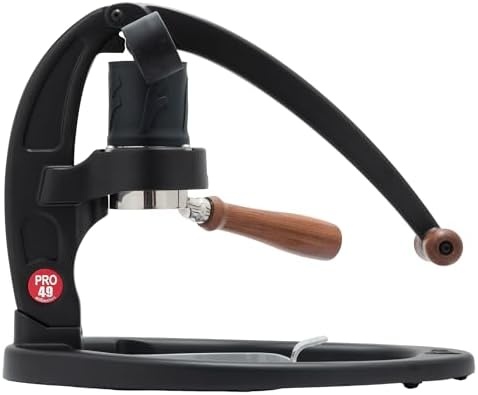
Flair UPDATED 49 PRO (Black), all manual 49mm lever espresso maker with handled portafilter, pressure gauge and no plastics in brew path
The pressure gauge teaches you more about extraction than any review, and nothing in the brew path is plastic
No pump, no steam wand, one shot at a time, and it will not forgive a bad grinder
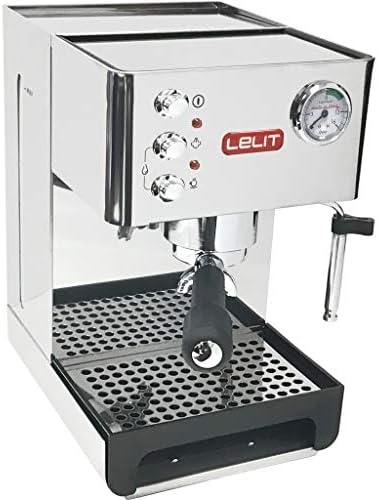
Lelit PL41EM Anna Espresso Machine
Traditional small-boiler design with standard parts, built to be repaired rather than replaced
You are the temperature controller, and the steam step takes real timing
Prices and availability were captured from Amazon Creators API and may change.
What I checked, and what I refused to guess
Straight talk first. I have not lived with all four of these on my counter for months, and I am not going to pretend I have. What I can do is read a machine the way I read my own nine-year-old Breville before it gave up the ghost: where does the water go, what breaks first, how painful is the descale, and will the person who buys it still be pulling shots in year three.
So I weighed four things. Whether the machine can hold a stable brew temperature, or asks you to manage that yourself. Whether it depends on a grinder you do not own yet. How much of the cleaning happens without taking anything apart. And how expensive the first realistic failure is likely to be, because on my old machine that failure was a twenty dollar valve that took an entire evening to reach.
No machine here gets credit for a feature that only exists in the product photo, and no longevity claim gets made without a design that supports it. That is the whole method.
XIXUBX Espresso Machine with Grinder, PID and Programmable Settings
This is the only machine in the group that solves the grinder problem on day one. The built-in grinder, the PID temperature control, and the programmable settings all point at the same person: someone who wants the same shot twice without becoming a hobbyist first. If you have ever bought an espresso machine and then discovered you needed to spend almost as much again on a burr grinder, this machine is aimed directly at you.
The PID is the part I care about most. Temperature swings are what turn a good bean into a sour shot on Monday and a bitter one on Tuesday, and a machine that holds a target temperature removes an entire variable from your morning. Programmable settings matter less to me, because the first thing I do with any preset is ignore half of it, but for a household with two people who want different shot volumes, they are genuinely useful.
The trade-off is the all-in-one bargain itself. When everything lives in one chassis, one failure takes the whole machine offline, and built-in grinders are usually the first component to feel limiting once your palate catches up to your equipment. If the grind steps are too wide for dialing in a light roast, you cannot swap the grinder without replacing the machine. Buy it if you want one plug and one footprint. Visit on Amazon →
De'Longhi Dedica Espresso Machine
The Dedica is the best cheap machine for a small kitchen, and I say that as someone who has watched a lot of small kitchens lose the counter war. It is thin, it heats quickly, and it makes surprisingly decent espresso once you pair it with a real grinder. The 15-bar pump and the frother are what the name promises, and the stainless steel body does not look like a toy sitting next to a toaster.
Here is the honest catch. Machines in this class lean on a pressurized basket to make up for pre-ground coffee and weak grinders, and a pressurized basket produces something closer to strong coffee than to a properly extracted shot. It is a fine place to start and a bad place to stay. My advice to anyone buying this machine is to budget for a burr grinder and a non-pressurized basket in the same purchase, because the machine only shows what it can do once you stop hiding the puck from it.
Thin machines trade counter space for tank and tray volume. That is the deal in this category, and it means more refilling and more emptying than a full-size box. If you accept that, the Dedica is the least intimidating machine here, and intimidation is what sends people back to the drip maker. Visit on Amazon →
Flair 49 PRO Manual Lever Espresso Maker
The Flair is the one machine in this comparison that will make you a better barista whether you want to be one or not. You are the pump. The handled 49mm portafilter, the pressure gauge, and the fact that there are no plastics in the brew path mean every variable is visible and every variable is yours.
The pressure gauge is invaluable. I have said this about every machine I have ever owned, and it matters more here, because with a manual lever the gauge is the only feedback telling you whether you are pushing nine bars or six. Learn to read it and you learn what extraction actually feels like, which is knowledge you carry to every other machine you ever touch.
What you give up is everything automatic. There is no steam wand, so milk drinks mean a separate frothing setup. There is no pump, so there is no push-button repeatability. It is one shot at a time, and it will not forgive a stale bean or a blade grinder. It also needs a kettle, which sounds obvious until you are standing in the kitchen at 6 a.m. remembering it. Buy this if you want the craft, not the convenience. Visit on Amazon →
Lelit PL41EM Anna Espresso Machine
The Anna comes out of the traditional Italian small-boiler school, and that heritage shows in the best way and the most annoying way. It is a machine built around standard parts and repair rather than replacement, the kind of design that assumes someone will open it up eventually. For a buyer who wants a machine to keep for a decade, that is worth real money.
It is also the machine here that asks the most patience in daily use. A small single boiler means one temperature for brewing and a different one for steaming, so you brew first and steam second, and you learn to time the transition instead of trusting a display. Temperature surfing is a skill, not a flaw, but it is a skill you have to want to learn.
The case for the Anna is longevity and serviceability. The case against it is that you are the controller. If you like the idea of a machine you can descale, reseal, and rebuild rather than replace, this is the one in the group built for that relationship. If you want a latte button, this is not your machine. Visit on Amazon →
The grinder is half the machine
I will keep saying this until people stop buying machines first and grinders second. A great machine with a weak burr grinder makes sad coffee at any price. The XIXUBX sidesteps the problem by including one. The De'Longhi and the Lelit both assume you will buy one, and the Flair absolutely requires one, because a manual lever with inconsistent grind gives you inconsistent pressure every single pull.
If you own a real burr grinder already, that changes the ranking here considerably. The Dedica becomes a small, cheap, capable machine instead of a starter kit. The Anna becomes a long-term project with a known ceiling. The Flair becomes a teaching tool you will actually use on weekends.
If you do not own one, price the grinder into the purchase before you price the machine. That is the math most people skip, and it is the reason so many first espresso machines end up in a cabinet next to a bread maker.
Descaling, water, and what actually kills these machines
Every machine in this comparison dies the same way if you neglect it: mineral scale builds in the boiler and the passages, flow drops, temperature gets erratic, and eventually something expensive fails. Descaling is not optional maintenance. It is the difference between a machine that lasts nine years and one that dies at eighteen months.
Two rules. Do not let the water run out, ever, because a dry boiler is how machines die young. And descale on schedule rather than on vibes, with an actual descaler rather than a home remedy you read about once. The manual Flair has the least to scale, since you are heating water separately and pushing it through once, which is a quiet advantage nobody mentions in the marketing.
Water quality matters as much as the schedule. If your tap water leaves spots on a glass, it will leave scale in a boiler. Filtered water or a proper water filter is cheaper than a new heating element, and it is the single easiest habit to build.
Warm-up, milk, and the morning timeline
Warm-up is where the daily experience actually lives. Thin thermoblock machines like the Dedica come up fast, which is why they suit people who decide at 6:45 that they want a latte. Boiler machines take longer and reward you for planning, which means putting the machine on before you get in the shower.
Milk is the other split. The Dedica and the XIXUBX give you a steam or frothing path to textured milk. The Anna makes you manage the steam transition. The Flair gives you nothing and expects you to own a separate frother or drink it black. If your household runs on flat whites, that difference decides more than any spec.
Trade-offs worth naming
Every machine here is a set of promises you accept. The XIXUBX promises convenience and repeatability in one footprint, and asks you to accept a fixed grinder. The Dedica promises a small, cheap, fast machine, and asks you to accept a starter basket and a smaller tank. The Flair promises control and transparency, and asks you to accept manual labor and no steaming. The Anna promises serviceability and traditional construction, and asks you to accept temperature management as your job.
None of these are flaws. They are the terms. The mistake is buying one machine and expecting the terms of another, which is how people end up with a lever machine they never use or a super-automatic they resent.
Who should buy which
Buy the XIXUBX if you want one purchase that covers grinding, temperature, and repeatability, and you would rather drink coffee than research it. Buy the De'Longhi Dedica if your counter is small, your budget is tight, and you are willing to add a burr grinder and a non-pressurized basket as you go. Buy the Flair 49 PRO if you want to understand extraction with your own hands and you mostly drink espresso rather than milk drinks. Buy the Lelit Anna if you want a traditional small machine you can keep running for years and you are ready to learn its rhythms.
The $99 lottery machines are not on this list for a reason. Some of them pull passable shots for a year. Most buzz, leak, and die, and then you are back here reading comparisons anyway.
What I am watching next
I am tracking owner reports on the all-in-one machines specifically, because the built-in grinder is the part that decides whether the XIXUBX is a three-year purchase or a nine-year one. On the manual side, I want to see how the Flair's brew path and seals hold up after a few hundred pulls, since that is where manual devices either prove themselves or start leaking.
And I am still running my own machines through the same morning routine, two double shots each, one latte, a full clean cycle, logging warm-up time and how annoying the descale is. That is the test that matters. Not the spec sheet.