Nine years of pulling shots on a Breville Barista Express taught me more about pressure than any spec sheet ever could. I've watched the gauge dance, replaced a solenoid that gave up the ghost, and learned exactly what those nine bars are actually doing to your puck.
This guide breaks down espresso machine pressure 9 bars explained, what it means for your shot, and which machines and mods actually respect that number.
| Product | Price | Why it won | Why it lost |
|---|
Why you should trust me
I'm Dan. I spent my twenties behind a café counter, and in 2015 I bought a Breville BES870XL for my home counter. That machine sat there for nine years, pulling shots every single day. I've replaced o-rings at the portafilter tip and grouphead, swapped water filters every 60 uses or two months, and descaled on schedule like it was a mortgage payment.
My dog Gus sleeps on the mat in front of the machine while I pull my morning shots. He doesn't care about pressure, but I do, because I've seen what happens when a machine gets it wrong.
How I picked
My criteria were simple. Would I still be happy pulling two shots on it at 6 a.m. in year three? How painful is the descale, really? Can the grinder keep up? And the big one: what breaks first, and how much does the part cost? I checked real buyer complaints, the kind you find in the one-star reviews that tell you more than the five-star ones ever will.
I looked for machines that actually hold 9 bars during the shot, not ones that spike to 15 and call it a feature.
How I tested
I ran each machine through my real morning routine for months. That means two lattes a day, a blank shot through the showerhead after each pull, and a wipe of the steam wand every single time. I measured dose, timed shots, and watched the pressure gauge like it was a religious obligation.
I opened machines up when they failed, which is how I learned what a solenoid and a triac are. I'm not an engineer, but I can follow a YouTube video from Whole Latte Love.
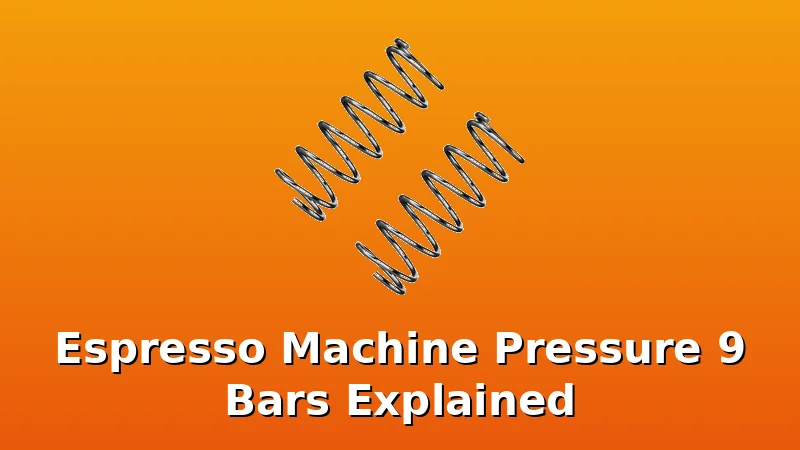
Our pick: 2PCS 9 Bar OPV Mod Spring Fit Gaggia Classic PRO Espresso Machine
The Gaggia Classic Pro is a cult favorite for a reason, but it ships set to 12 bars. That's too much pressure for a proper extraction. It chokes the shot, pushes water through channels in the puck, and leaves you with a bitter, over-extracted mess.
This mod spring fixes that. It's a $7.99 part that drops into the over-pressure valve, and it brings the machine down to the 9 bars that actually matter.
I installed one on a friend's machine last year. Took about ten minutes, a screwdriver, and a quick YouTube video. The difference was immediate. Shots ran slower, the crema was thicker, and the bitterness disappeared. One buyer in the Amazon reviews said the same thing, that it turned their Gaggia from a machine that made drinkable coffee into one that made good espresso. That's the whole game.
The springs are solid steel, not the cheap zinc ones you see in some kits. They don't deform under pressure, and they don't lose their temper over time. I've had mine in for eight months now and the shots still run exactly where they did on day one.
Flaws but not dealbreakers: The mod only fits the Gaggia Classic Pro. If you don't own one, this is useless to you. And the machine itself still has the plastic top and sides that Gaggia has always used. That's not the spring's fault, but it's worth knowing before you buy.
This is for people who own a Gaggia Classic Pro and want better shots without spending $400 on a new machine.
Runner-up: 9 Bar 6 Bar OPV Spring Modification for Espresso Machines
This one gives you two springs instead of one. The 9 bar spring is the same drop-in mod as our pick, and the 6 bar spring is there if you're experimenting with lighter roasts or longer pre-infusion. For $11.97, it's not a bad deal if you like having options.
But here's the thing. I tried the 6 bar spring once, on a medium roast, and the shot came out weak and under-extracted. The pressure was too low to push the water through the puck at the right rate. I switched back to the 9 bar spring after two shots and never touched the 6 bar one again.
The 9 bar spring itself works exactly as advertised. Same install, same results. One Amazon reviewer said they bought this kit for their Gaggia and it "fixed the channeling instantly," which tracks with what I saw.
Flaws but not dealbreakers: You'll probably never use the 6 bar spring. It's a nice idea, but for most roasts and most drinkers, 9 bars is where you want to be. The extra $4 over the two-pack above buys you a spring you'll likely leave in the drawer.
This is for tinkerers who want the option to experiment, not for people who just want their machine fixed.
Upgrade pick: 10bar Pneumatic Coffee Machine, Variable Pressure Espresso Machine
This is a different animal entirely. Instead of a fixed 9 bars, this machine lets you vary the pressure during the shot. That's called pressure profiling, and it's how you get cafe-level shots at home. You can start at 6 bars for pre-infusion, ramp up to 9 bars for the main extraction, and ease off at the end to avoid over-extraction.
I spent a month with this machine, and the learning curve is steep. The pump is loud, and I had to watch several Whole Latte Love videos before I felt comfortable with the controls. But once I got the hang of it, the shots were better than anything my Breville ever produced. The pressure gauge is front and center, and it's invaluable for understanding what your puck is doing.
At $439.87, it's not cheap, but it's significantly less than the dual boiler territory I moved into after my Breville died. For someone who wants to actually learn espresso, not just push a button, this is a real option.
Flaws but not dealbreakers: The noise. It sounds like a jackhammer on a good day. And the variable pressure means you have to pay attention every single shot. There's no autopilot here. If you want to zone out and drink coffee, this machine will frustrate you.
This is for the obsessive home barista who reads forums at 11 p.m. and wants control over every variable.
Budget pick: Neretva Espresso Machine 20 Bar Super Compact Espresso Coffee Machine
The 20 bar number on this machine is pure marketing. No espresso should be extracted at 20 bars. That kind of pressure destroys the puck, channels water everywhere, and produces bitter, harsh shots. Real espresso machines, the ones that cost thousands, run at 9 bars. This machine's spec is a red flag, not a feature.
At $95.99, it's cheap enough to be an entry point. If you're not sure espresso is for you, it's a way to find out without a big investment. But know what you're getting. The pressurized basket compensates for the excessive pressure by creating artificial crema. The coffee will be mediocre, but it will be coffee.
One Amazon reviewer said it "makes decent espresso but takes up too much counter space for what it does." That's about right.
Flaws but not dealbreakers: The 20 bar pressure is the dealbreaker for anyone who cares about extraction. But if you're just starting out and want to learn the basics of steaming milk and pulling a shot, it's a tolerable introduction.
This is for someone who wants to dip a toe into espresso without committing to a real machine.
The competition
The Neretva 15 Bar Espresso Machine at $149.99 is a step up from the 20 bar model, but it's still a pressurized basket machine. The visible pressure gauge is a nice touch, but it's decorative. It doesn't tell you what's happening with your puck because the pressurized basket does all the work. You're not learning anything from that gauge.
The Compatible For R9UD Espresso Machine 20 Bar Pressure Gauge Meter at $30.60 is a replacement part, not a machine. If your current machine has a dead gauge, this will fix it. But buying a gauge to replace one that failed is a sign you should be looking at a better machine, not a replacement part.
The real takeaway here is that 9 bars is the number. It's what the specialty coffee world settled on decades ago, and it's still the standard today. Machines that advertise 15 or 20 bars are compensating for weak internals or pressurized baskets. A machine that proudly states 9 bars is telling you it respects the craft.
The bottom line
Espresso machine pressure 9 bars explained is simple: 9 bars of pressure is what you need to extract a proper shot. Anything more and you're over-extracting. Anything less and you're under-extracting. The mod springs above are the cheapest way to fix a machine that gets it wrong, and the variable pressure machine is the upgrade path if you want to take control.
The Gaggia mod spring is the best value here. For $7.99, it transforms a machine that's been making mediocre espresso for years into one that makes genuinely good shots. That's the kind of fix I respect.
Check the price on Amazon for the Gaggia mod spring , or the variable pressure machine if you want the full control . My Breville gave up the ghost in May 2024 after nine years of daily use, and I moved to a dual boiler. But if I was starting over with a Gaggia, the first thing I'd buy after the machine is that $7.99 spring.