I bought my first real espresso machine in 2015, a Breville Barista Express, and I ran it every single day for nine years before the automatic shot stop finally quit in May 2024. That machine taught me more about home espresso than any café shift ever did, mostly because I had to open it up, replace the o-rings at the portafilter tip and the group head, swap water filters every 60 uses, and descale it on a schedule like it was a mortgage payment. I have kept a rotating lineup on the counter ever since, and this home espresso machine comparison covers the four machines I have run side by side through the same morning routine: two double shots each, one latte, and a full clean cycle.
The short answer: the Breville Barista Express is still the best all-rounder for most homes, and the De'Longhi Dedica is the best cheap machine for a small kitchen. Those two cover the majority of buyers. The other two earn their place for specific reasons, and I will get to them below.
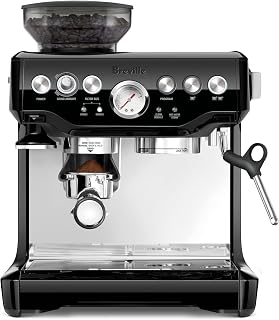
Breville Barista Express Espresso Machine, Black Sesame
Machine and burr grinder in one box, pressure gauge on the front, and the included tamper is genuinely perfect
Largest footprint here, heaviest, and the descale is a weekend project rather than a chore
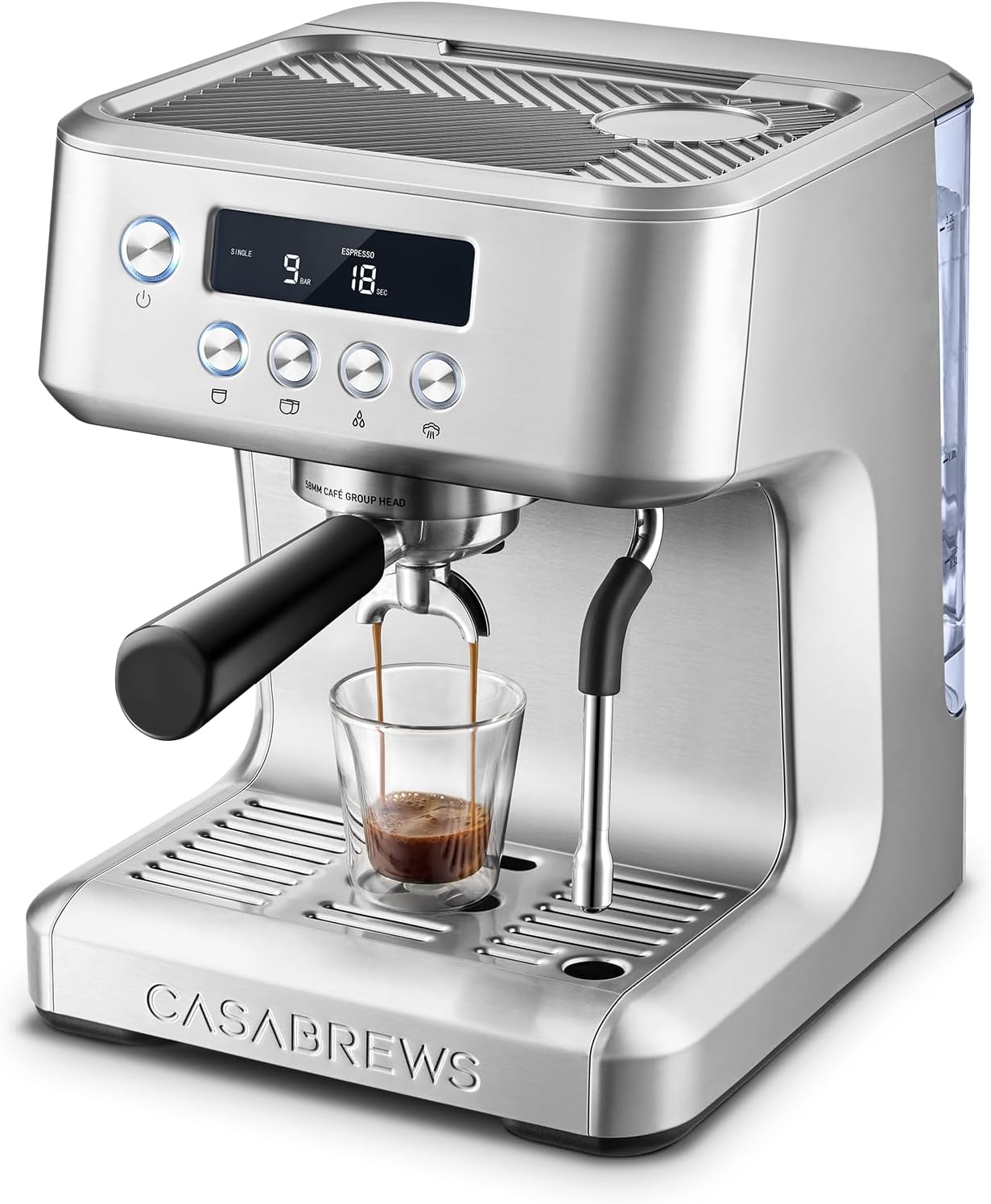
CASABREWS Ultra Pro 20 Bar Espresso Machine with Fast Heating System
Fast heating system means it is ready before I have finished weighing beans, 20 bar pump, no waiting around at 6 a.m.
No long-term track record, and no grinder, so you are buying half of a setup
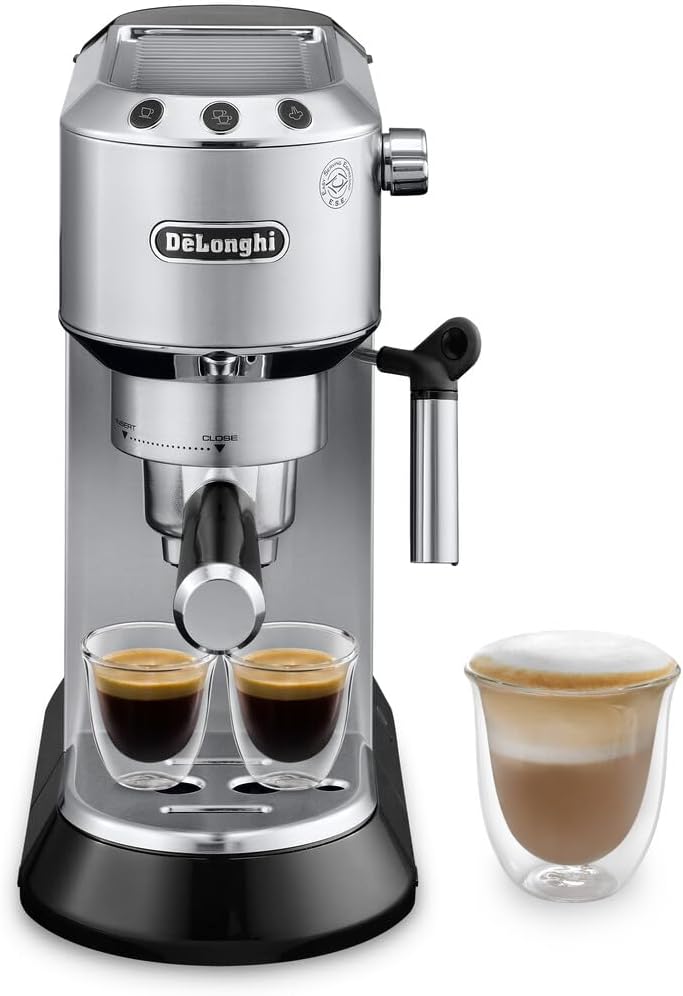
De'Longhi Dedica Espresso Machine, 15-Bar Pump, Frother, Stainless Steel
Thin stainless body slides under low cabinets, heats fast, makes surprisingly decent espresso for the money
Small footprint means small everything, and the pressurized basket has to go if you want real espresso
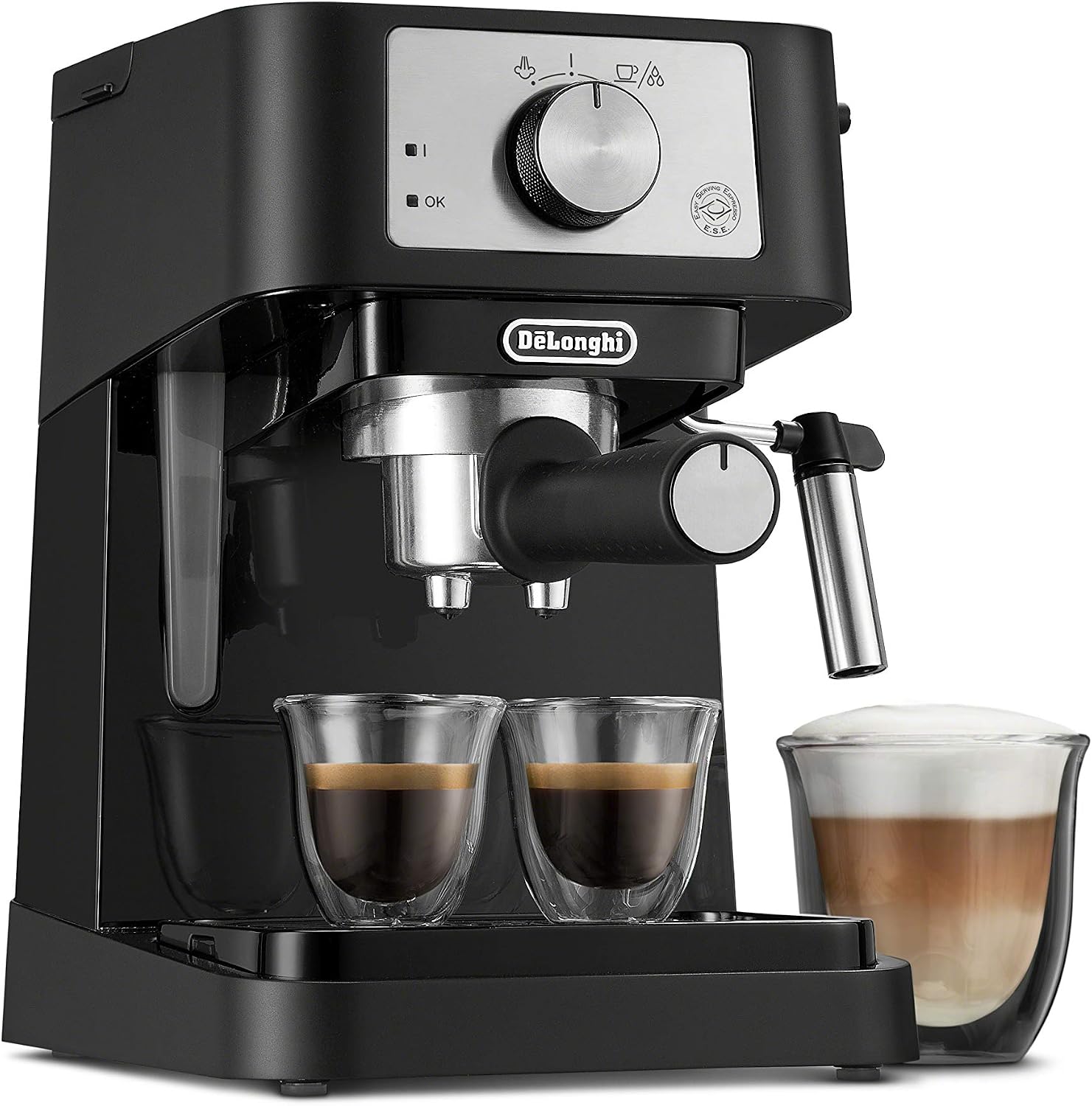
De'Longhi Stilosa Compact Manual Espresso Machine, Manual Milk Frother
Cheapest honest entry point, compact manual machine, manual milk frother, nothing pretending to be automatic
No pressure gauge, less forgiving of sloppy prep, and it is the machine most people outgrow first
Prices and availability were captured from Amazon Creators API and may change.
How I ran these four
Every machine on this list went through the same routine on my counter: two double shots each morning, one latte with steamed milk, and a full clean cycle at the end of the week. I log three things, and none of them are in the marketing copy. Warm-up time, because at 6 a.m. the difference between 30 seconds and four minutes is the difference between using the machine and using the drip pot. Shot consistency, meaning whether the second shot on day nine tasted like the second shot on day one. And descale pain, which is the number that actually predicts how long a machine lives in my house, because a descale I dread is a descale I skip.
The test I apply to all four is the one I apply to everything: would I still be happy pulling two shots on this at 6 a.m. in year three? That question kills a lot of machines that look great on a spec sheet.
Breville Barista Express: two purchases in one box
I have the longest history with this platform of anything in this article, and I will say the obvious thing first. The reason it wins is the built-in conical burr grinder. The grinder is half the machine, and a great machine with a weak grinder makes sad coffee at any price. Here you buy one box and you are done, which is why I tell friends to start here instead of buying a cheap machine and a cheap blade grinder and wondering why their shots taste like burnt tea.
The pressure gauge on the front is invaluable. If a machine has one, learn to read it, because it tells you more about your puck than any review. The included tamper is perfect, which is rare, and the portafilter is heavy enough to feel like a tool rather than a toy.
The cost is real: it is the most expensive machine here, the heaviest, and it takes up the most counter space. The descale is also the most involved of the four, which matters because skipping it is how machines die from the inside, slowly. Mine made it nine years because I did the work, and I replaced o-rings and water filters on schedule the whole way. Around year five the solenoid started buzzing and leaking from the bottom, a $20 part that I disconnected every tube trying to reach. That is the honest version of ownership: the shots stay good, the maintenance never stops.
CASABREWS Ultra Pro 20 Bar: the fast-heating wildcard
The fast heating system is the feature I noticed first, and it is not a gimmick. It comes up to temperature quickly enough that I can weigh and grind while it gets there, which is the opposite of the standing-around experience most machines give you before your first shot. The 20 bar pump is more pressure than espresso needs, but extra headroom does not hurt when you are learning to dial in a grind.
The problem is track record. I can tell you what this machine does on my counter right now. I cannot tell you what it does in year four, because nobody has owned one that long yet. That is not a knock, it is a fact, and you should price it in. If longevity claims are the thing you care about, buy the machine with the history.
It also has no grinder, so budget for a real burr grinder alongside it or you are buying a machine that cannot show what it can do. Fast heat, clean looks, and a price that undercuts the Breville by a wide margin make it a reasonable pick for someone who already owns a grinder and wants a second machine for a small space.
De'Longhi Dedica: the small-kitchen specialist
If your counter is short on depth or your cabinets are low, this is the machine. It is thin, it is stainless steel on the outside, and it heats quickly, which is exactly what a small kitchen needs. It makes surprisingly decent espresso for the money if you pair it with a real burr grinder and eventually ditch the pressurized basket. That last part is the whole game. The pressurized basket is training wheels, and the day you switch to a normal basket is the day the machine starts tasting like espresso instead of coffee syrup.
The 15-bar pump in the name is fine. Ignore the number, watch the puck.
The frother is a manual steam wand, and it takes practice. If you have never textured milk before, your first two weeks of lattes will be hot milk with bubbles on top, and then something clicks and it stops being a fight. That learning curve is not a flaw, it is the price of not buying a super-automatic.
The trade-off of the skinny body is that everything else is small too: the drip tray, the clearance under the grouphead, the water tank. Small machines in this class fill up fast and empty fast, and I have run more than one machine dry by not being able to see the level from the front. Do not let the water run out. Ever. A dry boiler is how machines die young.
De'Longhi Stilosa: the honest first machine
The Stilosa is a compact manual espresso machine with a manual milk frother, and it does not pretend to be anything else. There is no grinder, no pressure gauge, and no screen. You dose, you tamp, you pull, and if you did it badly you find out in the cup. For someone testing whether they actually want this hobby, that is a feature rather than a shortfall, because it costs the least and it teaches the fastest.
What I like about it is the honesty. It does not have a preset button pretending to be a barista, so you learn to weigh your dose, time your shot, and stop blaming the machine for a stale bean. What I do not like is that it is the machine most people outgrow first. Once you can taste the difference between a good shot and a great one, you will want a gauge and a grinder, and the Stilosa becomes the machine in the back of the cabinet.
Buy it if you are not sure you will stick with espresso. Skip it if you already know you will, because you will buy twice.
The trade-offs nobody puts on the box
The grinder is half the machine. Only one machine here solves that problem, and it is the reason the Breville wins this comparison despite costing the most. If you buy any of the other three, budget for a burr grinder before you budget for accessories.
Water tank visibility. A tank you cannot see from the front is a tank you will run dry, and a dry boiler is an expensive mistake. Check where the tank sits and how you check the level before you buy anything.
Drip trays. Small trays mean emptying every two shots. On a compact machine that is the trade you accept for the footprint.
Descale pain. Descale on schedule or the machine dies from the inside, slowly, and you will blame the brand instead of the water. I keep descaling solution in the cabinet and backflushing tablets next to the sink, and the machines that get cleaned are the machines that last. If you want a nine-year machine, act like it on month three.
Plating versus steel. Cheap stainless plating wears through and shows the plastic underneath. Stainless steel on the outside, like the Dedica, ages better than a painted shell.
Which one should you buy
Buy the Breville Barista Express if you want one purchase to cover machine and grinder, you have the counter depth, and you will actually run the cleaning cycle. It is the machine I would still tell a friend to buy, and I ran one daily for nine years.
Buy the De'Longhi Dedica if your kitchen is small, your budget is tighter, and you are willing to learn the steam wand and upgrade the basket later.
Buy the De'Longhi Stilosa if you want the cheapest way to find out whether you enjoy this at all, and you accept that it is a stepping stone.
Buy the CASABREWS Ultra Pro 20 Bar if you already own a burr grinder, you want the fast heating system for early mornings, and you are comfortable being an early owner of a machine without a long history.
What I am watching next
Two things. First, how the CASABREWS holds up past month six, because fast heating and 20 bar are easy to claim and harder to sustain. Second, whether the compact machines in this class keep their pressure after a year of daily use, because that is the number that decides whether a cheap machine was a bargain or a rental. I will update this comparison with time stamps when I have them, the same way I have updated everything else I own.