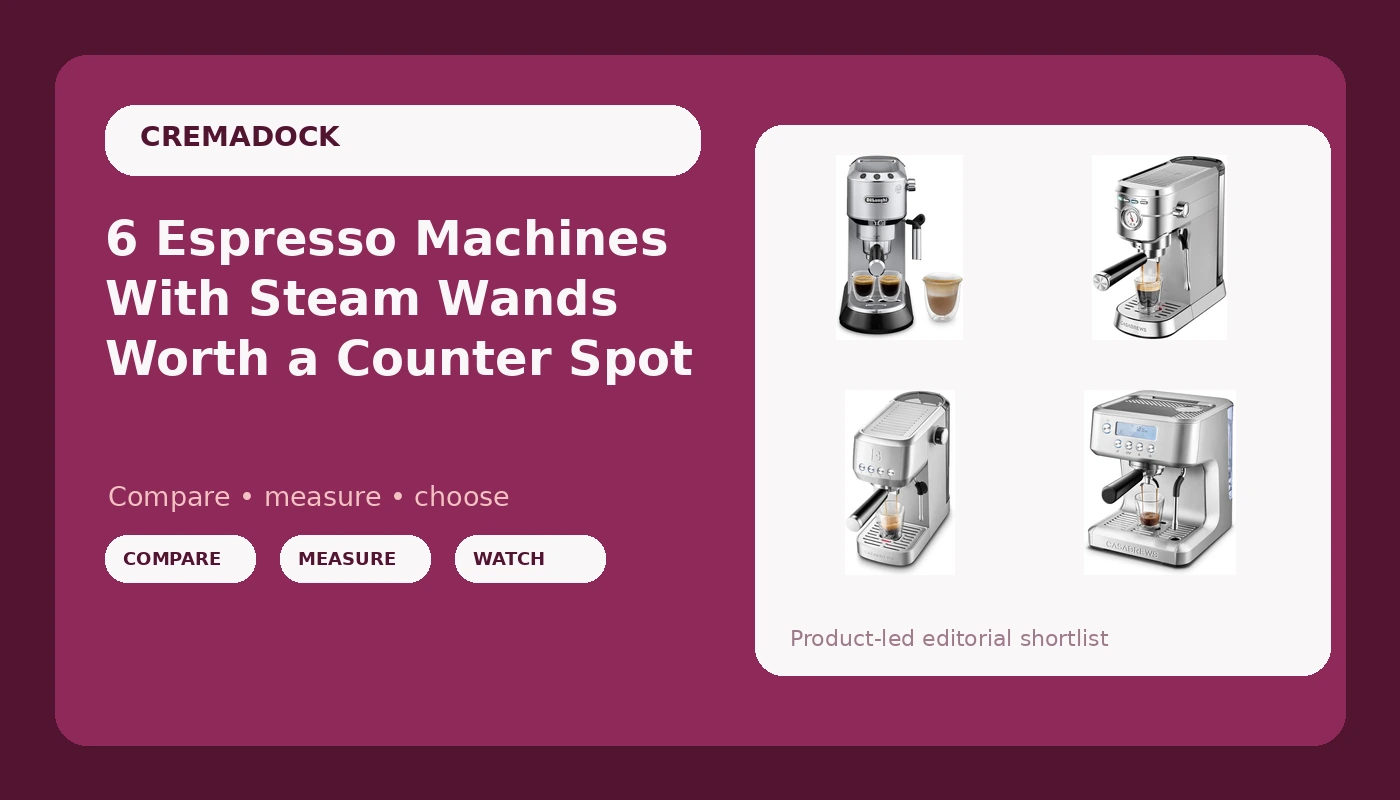
Espresso machines with steam wands are the middle of the market, and that is exactly where most home buyers land. The six models here all share the same basic shape: a pump, a portafilter, a water tank, and a wand or a frother for milk. What separates them is narrower and far more useful. Pump rating, wattage, body material, and footprint tell you whether a machine suits a twelve-inch strip of counter or a full coffee corner, whether the milk comes from a frother or from a steam wand you steer by hand, and how much machine you are signing up to clean. This guide sorts the six by those differences, says plainly what each one is for, and leaves the price checking to you, because pricing in this category moves constantly.
Related: How to Descale an Espresso Machine Without Killing It
Quick answer
The De'Longhi Dedica Espresso Machine, 15-Bar Pump, Frother, Stainless Steel is the strongest fit for small kitchens and first setups because it pairs a 15-bar pump and a built-in frother with a narrow stainless steel body that does not eat the counter. Choose the CASABREWS Ultra Espresso Machine, Barista Espresso Maker with Steam Wand instead when you want a barista-style machine with a steam wand and the footprint matters less than the wand does.
Espresso machines with steam wands worth comparing
The six machines below cover the realistic range of this category: a slim 15-bar machine with a frother, a compact unit built around a milk frothing steam wand, a stainless steel model with a steam wand, a barista-style machine with a steam wand, a 20-bar machine with a frother, and a 1400W stainless machine with a frother. Start with the card that matches your counter and your milk habit, then read the sections underneath for the maintenance side, which is where these machines actually separate from each other over years rather than weeks.
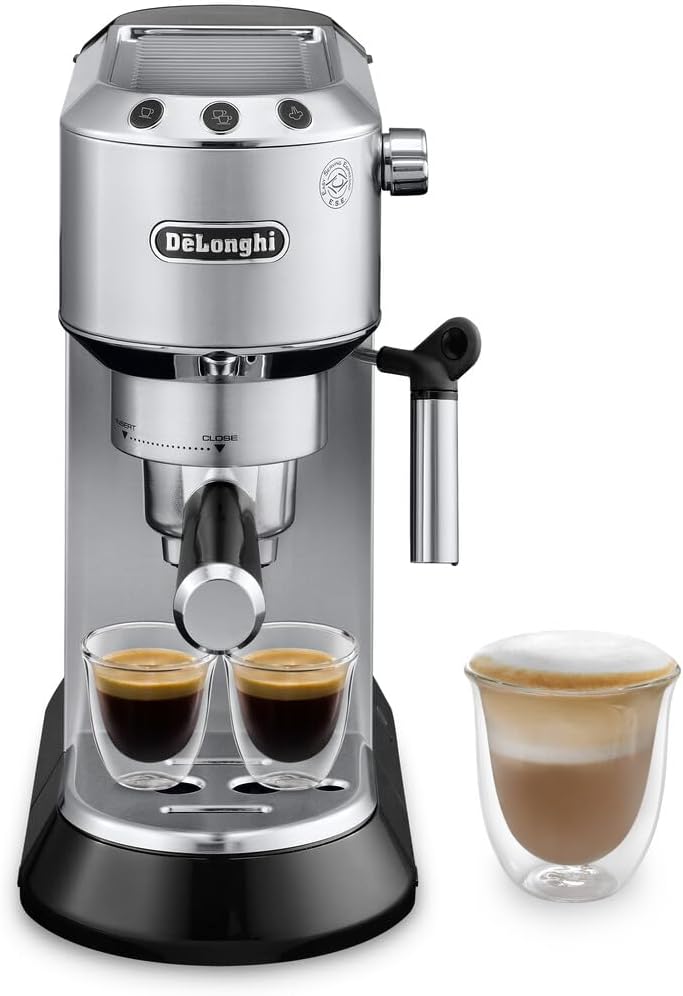
De'Longhi Dedica Espresso Machine, 15-Bar Pump, Frother, Stainless Steel
Check current Amazon price
A 15-bar pump machine with a built-in frother and a stainless steel body, built narrow enough to fit a short strip of counter.
Visit on Amazon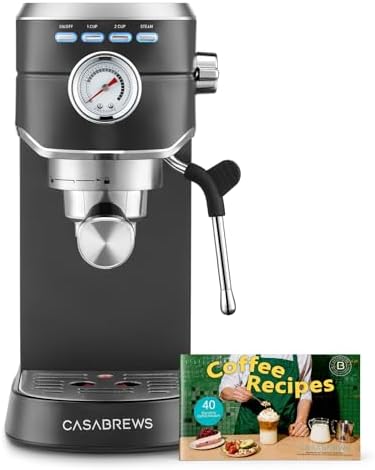
CASABREWS CM5418 Compact Espresso Machine with Milk Frothing Steam Wand
A compact espresso machine built around a milk frothing steam wand, sized for a small setup.
Visit on Amazon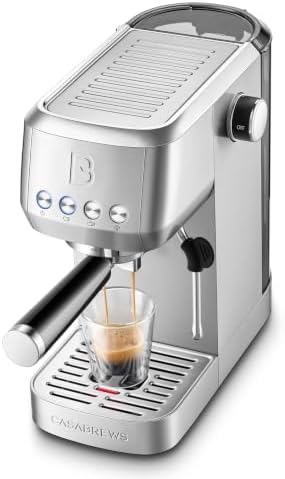
CASABREWS 3700 Essential Stainless Steel Espresso Machine with Steam Wand
A stainless steel espresso machine with a steam wand for anyone who wants the wand and the metal body in one unit.
Visit on Amazon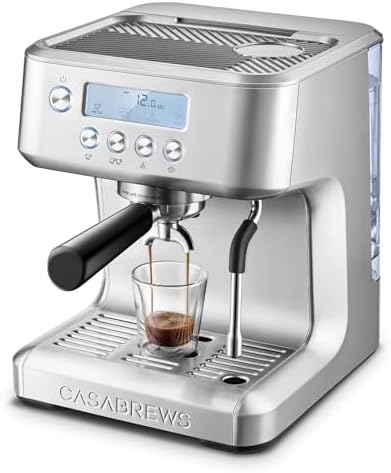
CASABREWS Ultra Espresso Machine, Barista Espresso Maker with Steam Wand
A barista-style espresso maker with a steam wand, positioned as the step up for buyers who want more control at the milk side.
Visit on Amazon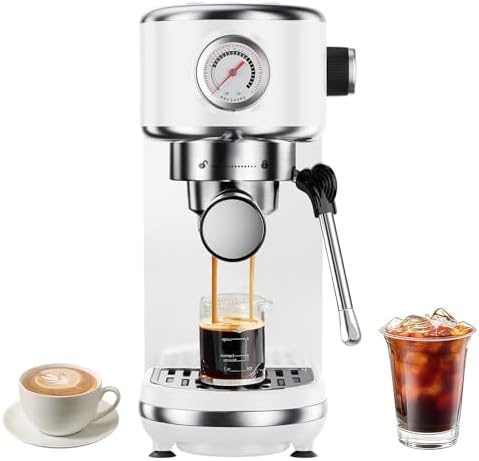
atatix Espresso Machine with Milk Frother, 20 Bar Pressure Espresso Maker
A 20-bar pressure espresso maker with a milk frother, the highest pump rating in this group.
Visit on Amazon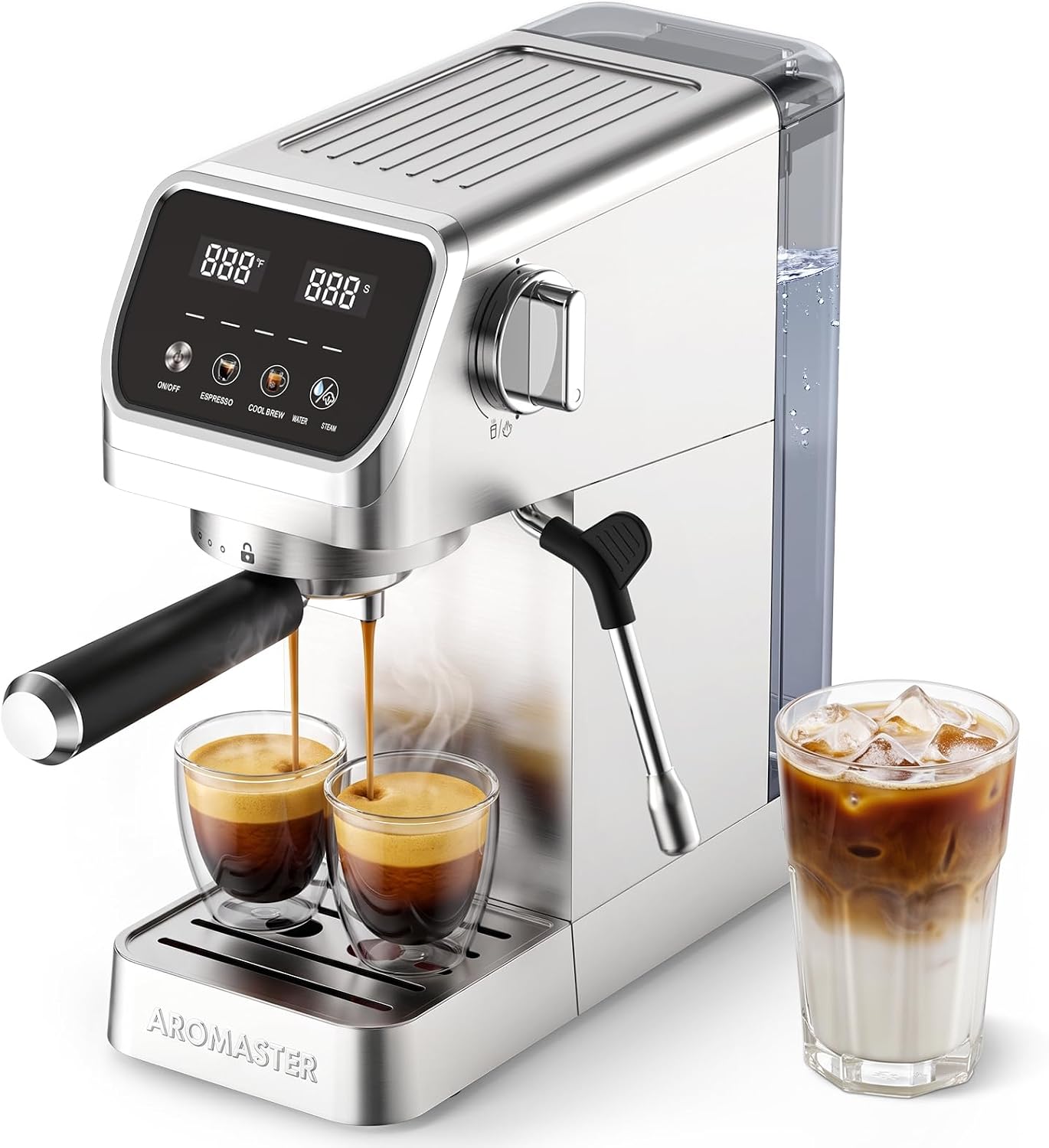
Aromaster 1400W Espresso Machine with Milk Frother, Stainless Steel
A 1400W espresso machine with a milk frother and a stainless steel finish, the highest wattage rating here.
Visit on AmazonPrices and availability may change. Check the retailer for current details.
How these products were compared
This guide compares stated pump pressure, how each machine handles milk (a frother versus a steam wand), body material and finish, counter footprint and cabinet clearance, and the cleaning and descaling routine the design implies. Product names, images, and retailer links are matched by ASIN so that every card points to the product shown.
Nothing here is presented as lab measurement. The distinctions are the ones a buyer can verify from the product listing and the manual: what the pump is rated at, whether the milk side is a frother or a steam wand, what the body is made of, and how much counter the machine occupies. Where two machines look alike on paper, the deciding differences are footprint and milk handling.
How to choose the right espresso machine
Start with the milk, because it decides more than any other feature. If you drink straight shots or americanos, the wand is a detail and you can buy on footprint and body material. If you drink lattes, cortados, and flat whites, the milk side is half the machine. A steam wand gives you control over texture, and control takes practice. A frother is faster and more forgiving, and it will not teach you anything. Neither is wrong. They are just different purchases, and the names on this list tell you which one you are looking at.
Next, match the footprint to the counter you actually have. A machine with a wide body and tall cup clearance crowds a small kitchen quickly, and a crowded machine is a machine you stop using. Measure the strip you plan to give up, then add the height you need to lift the tank lid and to slide a mug under the spouts. If your counter is tight, the slim machines here win on that measurement alone. If you have a full coffee corner, that advantage disappears and you can buy on other grounds.
On pump ratings, 15-bar and 20-bar both appear in this group, and the higher number is not automatically the better espresso. A pump rating is the pump's ceiling, not the pressure at the grouphead, and a machine that cannot hold steady pressure through the puck will taste thin at any rating. Treat the number as one line of the spec sheet, not the verdict.
Materials matter for the long haul. A stainless steel body wipes clean and looks the same in year three, while plated finishes wear through and show what is underneath. When a listing says stainless, check whether it means the body or just the accents, because the two are not the same thing on a counter that gets wiped twice a day.
Then there is the part nobody wants to hear: the grinder is half the machine. A pressurized basket and pre-ground coffee will get you a drinkable cup, but a burr grinder and a non-pressurized basket is where a machine starts tasting like espresso rather than like strong coffee. Budget for the grinder before you budget up on the machine. A modest machine with a real burr grinder beats an expensive machine fed by a blade chopper every single morning.
Finally, think about the maintenance you will actually do. Tank visibility from the front, a drip tray you are not emptying every two shots, and a descale routine that fits the manual are the features that keep a machine in service. If you know you will skip the cleaning cycle, buy accordingly, because that is the habit that decides how long the machine lasts.
De'Longhi Dedica Espresso Machine, 15-Bar Pump, Frother, Stainless Steel
At the top of this list is the slim one. The Dedica pairs a 15-bar pump with a built-in frother in a stainless steel body that is narrow enough to sit on a strip of counter most espresso machines cannot use. It is the machine I point small-kitchen buyers toward first, and it is the one here that makes the fewest demands on your space. For a first setup that combination matters, because the machine you keep using is the machine that does not require rearranging the kitchen every time you want a latte.
The trade-off is position rather than quality. This is the entry point of the group, not the ceiling. If you want the milk side to be a steam wand you steer by hand, the CASABREWS Ultra is the step up, and if you want the wand and a stainless steel body together, the CASABREWS 3700 Essential is the one to look at. The Dedica's advantage is the one you notice every morning: it fits, it heats, and it does not ask you to rebuild your counter around it.
Alternatives to consider
The CASABREWS CM5418 Compact Espresso Machine with Milk Frothing Steam Wand is better suited to a single-drink routine in a small space, where the compact body and the frothing steam wand are the whole point. The CASABREWS 3700 Essential Stainless Steel Espresso Machine with Steam Wand is a stronger fit when you want a stainless steel body and a steam wand in the same machine.
The CASABREWS Ultra Espresso Machine, Barista Espresso Maker with Steam Wand, the atatix Espresso Machine with Milk Frother, 20 Bar Pressure Espresso Maker, and the Aromaster 1400W Espresso Machine with Milk Frother, Stainless Steel cover the rest of the range: a barista-style machine with a steam wand, a 20-bar machine with a frother, and a 1400W stainless machine with a frother. Which of the three is right depends on whether you are buying for the wand, for the pump rating, or for the body and wattage.
Day-to-day use and maintenance
Every machine on this list lives or dies by the same routine, and none of it is complicated. Rinse the portafilter and basket after each session so old grounds do not sit in the grouphead. Purge the steam wand immediately after steaming, before milk dries inside the tip, and wipe it down while it is still warm. Run the cleaning cycle when the machine asks for it rather than when the shots start tasting off. Descale on the schedule in the manual, and use filtered water so you are not descaling more often than the manual's worst case. Never let the tank run dry, and empty the drip tray before it overflows rather than after.
Buy the consumables at the same time you buy the machine: cleaning tablets for the group, a descaler for the boiler, and a spare filter if your model uses one. Keep them in the cabinet next to the machine so the routine is one motion instead of a project. The difference between a machine that runs for years and one that quits early is almost never the pump. It is whether the owner kept up with the small jobs.
Before any cleaning or descaling, unplug the machine and let it cool. Follow the manufacturer's instructions for your exact model, particularly on which solutions are approved, and check whether descaling requires a dedicated cycle and a rinse sequence afterward. When in doubt, the manual beats any forum thread, including mine.
Buying checklist
- Measure the counter strip, including height clearance for the tank lid and a mug under the spouts.
- Choose a 15-bar or 20-bar machine based on the machine as a whole rather than the number alone.
- Confirm that the exact model includes a steam wand or a frother, since names in this category often mention one and not the other.
- Read the cleaning and descaling instructions before buying, and price the consumables alongside the machine.
- Verify the current retailer price, availability, and return terms.
Final recommendation
Choose the De'Longhi Dedica Espresso Machine, 15-Bar Pump, Frother, Stainless Steel when your counter is tight and you want a slim 15-bar machine with a frother and a stainless steel body. Choose the CASABREWS Ultra Espresso Machine, Barista Espresso Maker with Steam Wand when you want a barista-style machine with a steam wand and space is not the constraint. If the deciding factor is a compact body, look at the CASABREWS CM5418. If it is a 20-bar pump with a frother, look at the atatix. If it is wattage and a stainless finish, look at the Aromaster. Whichever you pick, put a burr grinder in the budget before you upgrade the machine, and put the cleaning supplies in the same order.